How to Find High-Paying Loads Without Spending Hours on DAT or Truckstop

Most dispatchers rely on platforms like DAT Load Board and Truckstop Load Board as their primary source of freight. These platforms provide access to available loads, but they do not solve the main challenge in modern dispatching.
The real bottleneck is not freight availability, but evaluation - determining which loads are actually worth taking under time pressure.
High-paying loads are not identified by increasing search effort, but by improving filtering and speeding up decision-making.
In modern freight markets, dispatchers face high volumes of similar-looking options, inconsistent signals, and limited time to evaluate each opportunity. As a result, potentially profitable freight is often lost in the noise of irrelevant listings.
This creates a structural inefficiency where more data does not improve decision quality and often slows it down.
Most inefficiencies in trucking come from evaluation, not access.
Even when hundreds of loads are available on platforms like DAT Load Board and Truckstop Load Board, only a small portion meet profitability and routing constraints.
Why Load Boards Like DAT and Truckstop Are Time-Intensive
Load boards like DAT Load Board and Truckstop Load Board aggregate large volumes of freight data, but scale does not automatically translate into efficiency. Instead of simplifying dispatching, they shift the complexity of decision-making onto the user.
The dispatcher is left to manually interpret and compare every opportunity without a built-in prioritization system.
The main inefficiencies come from:
- Unfiltered volume of listings - many loads do not meet basic profitability or operational requirements, but still require attention
- Manual evaluation process - rate, distance, deadhead, and broker conditions must be analyzed repeatedly for each option
- Lack of ranking logic - loads are not structured by efficiency or profitability, only listed as available inventory
- Constant context switching - comparing multiple loads creates fragmentation in attention and slows decision flow
As a result, dispatchers are not simply searching for freight - they are manually filtering out noise before any real decision can be made.
Load boards provide access to freight, but they do not provide clarity on what deserves attention.
The Real Problem Is Decision Friction
Decision friction in dispatching refers to the cumulative slowdown caused by repeatedly evaluating similar freight options without a structured filtering system.
The core challenge in dispatching is not scarcity of loads, but the speed and quality of decision-making under uncertainty.
Most loads appear “potentially acceptable” at first glance, which creates a false sense of choice. This leads to unnecessary evaluation work even when only a small fraction of options are truly viable.
The workflow typically breaks down into:
- Excess of similar options - multiple loads appear comparable, even when only a few are efficient
- Slow manual comparison - each option must be evaluated across multiple variables (rate, miles, deadhead, timing)
- Inconsistent decision criteria - urgency, fatigue, and time pressure replace structured evaluation logic
Over time, this creates decision friction - a compounding slowdown in both speed and quality of decisions due to repeated cognitive load.
In freight operations, the biggest cost is not lack of opportunities, but time lost filtering them.
What “High-Paying Load” Actually Means
The concept of a “high-paying load” is often reduced to headline rate, but this definition is incomplete and misleading in operational terms.
True profitability is multidimensional and depends on how efficiently revenue is generated relative to cost and execution constraints.
A realistic evaluation includes:
- Rate per mile (RPM) - baseline indicator of revenue efficiency relative to distance
- Deadhead distance - unpaid miles required to access the load, directly impacting real profitability
- Lane consistency - how well the load fits into repeatable routing patterns
- Broker reliability - operational risk factor affecting payment stability and execution smoothness
A load that looks profitable based on rate alone can still be unprofitable when deadhead distance and lane inefficiency are included in the total trip cost.
When these factors are evaluated together, “high-paying” shifts from being a single metric to a system-level outcome.
A high-paying load is not the highest rate available - it is the most efficient combination of revenue, distance, and operational reliability.
This redefinition is critical because it moves dispatching away from intuition-based selection toward structured evaluation logic.
The Load Filtering System (Core Framework)
High-performing dispatch operations do not rely on browsing through listings. They rely on a repeatable filtering system that reduces unnecessary evaluation time and improves decision consistency.
Step 1 - Set criteria before searching
Before entering any load board, clear constraints must already be defined:
- Minimum RPM threshold
- Preferred lanes or regions
- Excluded regions or undesirable routes
This step ensures that low-value freight is filtered out before it ever reaches manual review.
Step 2 - Filter instead of browse
Instead of scanning all available loads, the goal is to eliminate irrelevant freight immediately based on predefined rules.
This shifts the workflow from exploration to control - reducing cognitive overload and removing time spent on options that were never viable in the first place.
Step 3 - Score loads instead of comparing manually
Rather than comparing loads one by one, each opportunity is evaluated through a simple scoring layer:
- Profitability score (rate vs distance)
- Broker trust score (historical reliability)
- Efficiency score (deadhead + lane fit)
A filtering system reduces decision load by eliminating non-viable freight before comparison begins, rather than optimizing decisions after the fact.
This transforms load selection from subjective comparison into a structured ranking system.
The fastest dispatchers don’t search harder - they evaluate faster using structured criteria.
What This Looks Like in Real Dispatching (Example)
To understand how structured dispatching works in practice, consider a typical session inside platforms like DAT Load Board or Truckstop Load Board.
Manual approach
A dispatcher opens a load board and is presented with hundreds of available loads that match the truck's location and equipment type.
Among them are:
- Multiple similar RPM offers
- Different pickup distances
- Varying broker conditions
- Mixed lane directions
- Different delivery schedules
The dispatcher must manually filter and evaluate potential options, comparing:
- Rate per mile (RPM)
- Deadhead miles
- Delivery timing
- Broker notes and reputation
After reviewing dozens of loads and spending significant time comparing alternatives, the final decision is often based on the most visible or seemingly attractive option rather than a structured evaluation framework.
Result:
- Longer decision time
- Higher cognitive load
- Increased risk of overlooking more profitable freight
- Greater chance of losing quality loads to faster competitors
Structured approach (with filtering system)
Using a structured system like LoadConnect, the same pool of available loads is automatically filtered and ranked based on:
- RPM thresholds
- Lane compatibility
- Deadhead efficiency
- Broker reliability signals
Instead of sorting through hundreds of opportunities, the dispatcher receives a shortlist of 2–3 high-fit loads that already meet predefined business criteria.
The decision process shifts from endless comparison to fast selection.
Result:
- Decision time drops from minutes to seconds
- No repetitive comparison cycles
- Reduced dispatcher workload
- Higher probability of securing freight before competitors
Example: Why Highest RPM Doesn't Always Win
Consider three available loads:
| Load | RPM | Deadhead | Lane Fit | Overall Score |
|---|---|---|---|---|
| A | $2.80 | 70 mi | Medium | 72 |
| B | $2.55 | 15 mi | High | 91 |
| C | $3.10 | 140 mi | Low | 63 |
At first glance, Load C appears to be the most attractive option because it offers the highest RPM.
However, when deadhead distance and lane efficiency are included in the evaluation, Load B becomes the strongest operational choice.
Although Load C has the highest RPM, Load B generates the best overall score due to lower deadhead, stronger lane alignment, and better overall efficiency.
This illustrates why structured dispatching focuses on total operational value rather than a single metric.
Manual vs Structured Dispatching: comparison table
| Manual Dispatching | Structured Dispatching |
|---|---|
| Continuous browsing through load boards | Pre-filtered and ranked opportunities |
| Loads evaluated one by one | Loads evaluated using predefined criteria |
| Decisions based on urgency, experience, or intuition | Decisions based on repeatable rules and scoring |
| Frequent comparison of similar loads | Early filtering removes irrelevant options |
| Higher cognitive load for dispatchers | Lower cognitive load through prioritization |
| Inconsistent decision quality | Consistent decision quality across the team |
| Difficult to scale and replicate | Easier to standardize and scale |
| Reactive workflow | System-driven workflow |
In a manual model, every load is treated as a separate decision. Dispatchers spend significant time comparing similar options, calculating profitability, and filtering out low-value freight.
In a structured model, predefined filters, scoring rules, and lane strategies eliminate most irrelevant options before evaluation begins. This shifts attention away from repetitive analysis and toward execution.
Structured dispatching transforms load selection from a variable daily activity into a repeatable operating system that improves consistency, reduces decision fatigue, and supports faster execution.
Key takeaway from real workflow:
The difference is not access to loads - it is how many decisions a dispatcher actually has to make.
Focus on Lanes Instead of Individual Loads
One of the most important shifts in freight dispatching is moving away from evaluating individual loads and toward thinking in lanes as repeatable revenue systems.
When working through platforms like DAT Load Board and Truckstop Load Board, it is easy to optimize for the highest-paying individual load in the moment. However, this often creates inconsistency in routing, increases deadhead miles, and destabilizes weekly revenue.
In contrast, experienced dispatchers prioritize lanes - consistent routes where freight demand and pricing behavior are more predictable.
Repeatable lanes = predictable revenue
When dispatching is based on stable origin–destination patterns, revenue becomes easier to forecast and downtime between loads decreases.
Lane-based dispatching improves profitability by reducing empty miles and increasing predictability of freight availability on repeat routes.
One-off loads = inefficiency
High-paying individual loads may look attractive, but they often break route efficiency and introduce repositioning costs that reduce overall performance.
Over time, lane-based thinking creates operational stability that is more valuable than occasional high-rate wins.
Consistency in lanes generates more profit than chasing isolated high-rate loads.
In modern freight dispatching, performance is determined less by access to load data and more by the speed and structure of decision-making applied to that data.
Speed Matters More Than Searching More
In modern freight markets, timing often matters more than the depth of search. The strongest loads on platforms like DAT Load Board and Truckstop Load Board rarely stay available for long, especially on competitive lanes where multiple dispatchers are acting on the same signals at the same time.
The practical implication is simple: even when a high-quality load is identified, hesitation in evaluation can be enough to lose it. In this environment, speed is not a convenience — it is part of the competitive structure itself.
Several dynamics drive this:
Good loads move fast - strong freight is often booked within minutes, not hours.
Delay compounds risk - time spent debating marginal differences increases the chance of losing the load.
Execution speed wins consistently - dispatchers who evaluate and act faster outperform those who optimize endlessly.
This creates a clear pattern in freight: speed of decision becomes more important than marginal improvement in choice quality. The goal is no longer perfect selection, but consistently fast and correct enough decisions.
This is also why structured evaluation systems matter. When decisions are supported by clear filters and rules, speed stops being a trade-off against accuracy and becomes a natural outcome of the process.
Common Mistakes When Searching for Loads
Even experienced dispatchers lose efficiency when load selection is driven by manual scanning rather than structured evaluation. The issue is not lack of skill, but lack of consistent decision architecture.
The most common mistakes include:
Focusing only on RPM
Rate per mile is a useful signal, but it does not reflect total trip profitability once deadhead, timing, and route efficiency are included.
Ignoring deadhead distance
A high-paying load can become inefficient if significant unpaid miles are required to reach pickup, eroding overall margin.
Frequent lane switching
Constantly changing regions prevents the development of predictable routing patterns and reduces operational stability.
Excessive browsing
Over-scrolling load boards increases cognitive fatigue and leads to lower-quality decisions over time.
Individually, these issues seem minor. Combined, they create a system where decisions are slow, reactive, and difficult to optimize consistently.
How Automation Changes Load Selection (and Why It Matters)
As freight operations scale, the limiting factor shifts. It is no longer access to loads - it is the time and cognitive effort required to evaluate them correctly. Even with platforms like DAT Load Board and Truckstop Load Board, most dispatchers still operate in a manual loop of scanning, comparing, and filtering.
This is where automation changes the structure of the work itself.
Instead of treating load boards as raw search environments, modern dispatch systems introduce a decision layer on top of them. Loads are filtered, ranked, and pre-evaluated before the dispatcher ever opens them.
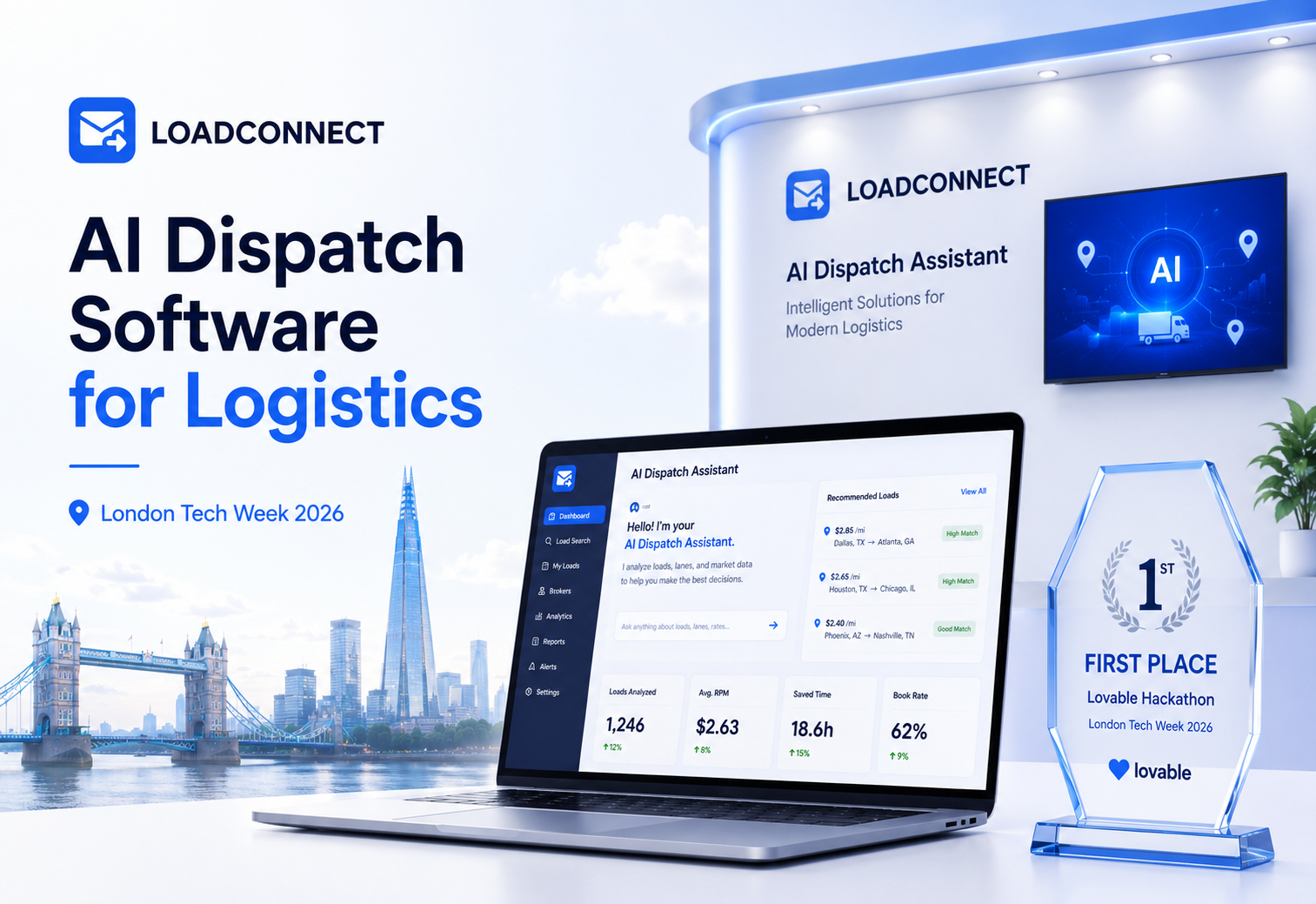
LoadConnect is designed around this shift - from manual browsing to structured decision-making. It does not expand access to freight; it changes how that freight is processed and selected.
What LoadConnect Actually Does in Practice
To understand the impact, it is more useful to look at operational behavior rather than abstract descriptions.
First, it reduces manual scanning
Instead of working through long, unstructured lists on DAT or Truckstop, dispatchers see a filtered set of loads that already match predefined constraints such as RPM thresholds, lane preferences, deadhead limits, and broker reliability signals. This removes a large portion of irrelevant options before evaluation even begins.
Second, it introduces structured prioritization
Rather than treating all listings as equal, loads are ranked based on combined signals - profitability potential, lane efficiency, and operational cost impact. This changes the default behavior from “what is available” to “what is best right now.”
Third, it compresses decision cycles
The most time-consuming part of dispatching is not finding options, but comparing similar ones. By structuring and pre-sorting opportunities, LoadConnect removes repeated comparison loops and reduces hesitation points in the workflow.
Why This Changes Dispatching Economics
Traditional dispatching follows a linear pattern:
search → open loads → compare → decide → repeat
Structured dispatching replaces this with a shorter decision path:
filtered loads → ranked options → selection → execution
The difference is not cosmetic. It directly affects operational outcomes because freight markets are time-sensitive by nature. Good loads disappear quickly, hesitation has immediate cost, and speed compounds into long-term advantage.
The Core Insight Behind Modern Dispatching
The key shift is conceptual. The advantage is no longer in finding better loads through more effort, but in reducing friction inside the decision process itself.
Automation does not remove the dispatcher from the equation. It removes repetitive evaluation work that slows down decision-making. What remains is judgment, execution, and strategy - not manual filtering of noise.
The modern dispatching model can be summarized in a single equation:
High-paying loads = Filtering System + Lane Strategy + Fast Execution
LoadConnect functions as the execution layer that connects these elements into a single workflow, turning them from separate principles into a consistent operational system.
FAQ: High-Paying Loads & Faster Dispatching (Enhanced Version)
What is the fastest way to find high-paying loads?
The fastest way to find high-paying loads is to reduce evaluation time, not increase search volume.
Load boards like DAT Load Board and Truckstop Load Board provide access to freight, but they do not help prioritize which loads are worth taking.
Efficiency depends on how quickly irrelevant options are filtered before manual review begins.
The core principle is structured filtering before decision-making.
This includes:
- defining criteria before searching
- applying RPM, lane, and deadhead filters early
- removing unqualified listings before comparison starts
High-performing dispatch systems reduce evaluation workload by ranking freight before human review.
The goal is not to find more loads, but to consistently evaluate fewer, higher-quality options faster.
Why do dispatchers spend so much time on DAT or Truckstop?
Dispatchers spend significant time on DAT and Truckstop because the workflow is manual and unprioritized.
These platforms provide freight visibility, but they do not rank loads by profitability or operational efficiency.
As a result, every option must be manually evaluated.
Common friction points include:
- repeated rate vs distance comparisons
- manual deadhead and route calculations
- broker verification and condition checks
- constant switching between listings
This creates slow, reactive decision-making under time pressure.
Structured dispatch systems reduce this friction by pre-filtering and scoring loads before evaluation begins.
What actually defines a high-paying load?
A high-paying load is not defined by the highest rate per mile.
It is defined by total trip profitability across multiple operational factors.
Key factors include:
- Rate per mile (RPM)
- Deadhead distance
- Lane consistency
- Broker reliability
- Reload potential
When these variables are combined, profitability becomes a system-level outcome rather than a single metric.
A high-paying load is the best balance of revenue, distance, and operational efficiency.
How can dispatchers reduce decision fatigue?
Decision fatigue occurs when too many similar freight options are evaluated without structured criteria.
The main cause is repeated manual comparison under time pressure.
The solution is structured decision filtering.
This includes:
- defining criteria before searching
- eliminating irrelevant loads early
- replacing comparison with scoring
- reducing cognitive load per decision
Decision fatigue decreases when fewer but higher-quality options reach the evaluation stage.
The real constraint in dispatching is not load availability, but time lost evaluating marginal freight.
Does automation replace dispatchers?
Automation does not replace dispatchers.
It removes repetitive evaluation work, not decision-making or accountability.
Dispatchers still handle:
- final selection decisions
- broker communication
- strategy and lane planning
- exception handling
Automation systems like LoadConnect improve dispatching by filtering and prioritizing freight before human review.
This allows dispatchers to focus on high-impact decisions instead of manual screening.
How do lanes improve profitability?
Lanes improve profitability by creating predictable and repeatable freight patterns.
Repeatable lanes reduce deadhead miles and stabilize revenue flow over time.
They also improve forecasting accuracy and operational efficiency.
Frequent lane switching leads to:
- higher empty miles
- inconsistent pricing outcomes
- unstable weekly revenue
Lane-based dispatching turns freight selection into a structured system instead of isolated decisions.
Consistency in lanes produces more stable profitability than chasing individual high-rate loads.
What is the modern approach to load selection?
Modern load selection is based on structured decision systems rather than manual browsing.
It replaces unstructured search with filtering, ranking, and prioritization.
The system is built on three elements:
- Filtering system (removes irrelevant freight early)
- Lane strategy (ensures repeatable routing efficiency)
- Fast execution (captures time-sensitive opportunities)
Instead of evaluating all available loads, dispatchers operate only within pre-filtered, ranked options.
High-paying loads = Filtering System + Lane Strategy + Fast Execution
Conclusion
The most efficient dispatch operations are not defined by how many loads are available, but by how consistently high-quality decisions are made under time constraints.
Finding high-paying loads in today’s freight environment is no longer about reviewing more listings on platforms like DAT Load Board and Truckstop Load Board. It is about improving how decisions are made under time pressure.
Load boards provide access to freight, but they do not improve decision quality on their own. The real performance difference comes from the system used to filter, evaluate, and prioritize opportunities before action is taken.
The most effective dispatch operations are shifting from reactive browsing to structured decision-making. Instead of manually scanning every available load, they rely on predefined criteria, lane strategy, and faster execution cycles that reduce unnecessary evaluation time.
In practice, this means:
- reducing time on load boards by filtering low-value freight early
- improving decision quality through consistent rules like RPM, deadhead, and broker reliability
- focusing on lanes that generate repeatable and predictable revenue instead of isolated high-rate wins
When these elements work together, dispatching stops being a search process and becomes a structured execution system. The advantage is no longer in how many loads are visible, but in how consistently the right decisions are made under time pressure.
In this model, tools like LoadConnect represent a shift toward structured evaluation - where filtering, prioritization, and speed are embedded into the decision process itself rather than left to manual effort.
Success in dispatching is not about finding more loads, but consistently choosing better ones faster, with less friction and more clarity.