Load Boards Are Not Enough: Why Trucking Companies Need AI to Choose Profitable Freight

Not long ago, the hardest part of trucking was finding freight. Today, that problem has largely disappeared. Modern trucking load boards, broker platforms, and digital freight marketplaces are flooded with available loads, with new postings appearing every second across major freight load boards.
Carriers, dispatchers, and owner-operators now have more access to freight than at any point in industry history.
And yet profitability remains unstable.
The reason is simple: freight access increased, but decision quality did not improve at the same pace.
Most carriers are no longer losing money because they cannot find loads. They are losing money through small, repeated operational decisions that slowly compound into margin loss.
A load may look profitable at first glance:
- strong rate per mile (RPM)
- convenient pickup location
- fast booking opportunity
But after delivery, the outcome can look very different.
The truck may end up in a weak outbound market with limited reload options and higher deadhead exposure. What initially looked like a good decision quietly reduces total trip profitability across the next several moves.
This is not an occasional issue. It is a structural pattern in modern trucking.
Most profitability loss does not come from obviously bad freight. It comes from acceptable loads that create poor positioning, weak reload conditions, and inefficient downstream opportunities.
This is where traditional trucking load boards show their limitation. They are built to display freight - not to evaluate what that freight does to the next decision.
Freight visibility is no longer the advantage. Decision quality is.
Why Modern Trucking Load Boards No Longer Create Competitive Advantage
For years, trucking companies optimized around access:
- more load boards
- more broker relationships
- faster booking speed
- broader freight visibility
This worked in a fragmented market where freight was scarce and information was uneven.
That structure no longer exists.
Today, most carriers operate inside the same ecosystem: the same trucking load boards, broker networks, digital freight marketplaces, and publicly visible rate data.
In practice, this means freight markets are now operationally transparent. Nearly every carrier sees the same loads.
So the real difference is no longer what you can access, but how you evaluate what you see.
A dispatcher may review 100+ loads in a single session. Under time pressure, most options start to look almost identical: similar RPM, overlapping lanes, comparable pickup windows, nearly identical broker postings.
But trucking profitability is not decided by a single load.
It is defined by the sequence of decisions that follow.
Each load influences:
- truck positioning
- reload probability
- market exposure
- future rate opportunities
- cumulative deadhead
Traditional load boards were never designed to account for this layer. They display freight, but they do not optimize outcomes.
This gap has become one of the largest inefficiencies in modern freight operations. In modern freight markets, speed still matters. But when most carriers have access to the same freight, long-term performance increasingly depends on making better decisions consistently, not simply reacting faster.
Why “Best Load Board” Debates Miss the Point
The trucking industry still spends significant time debating what the “best load board” is. Whether it is DAT vs Truckstop, free vs paid platforms, or general freight boards vs niche solutions, these discussions appear operationally important on the surface.
In reality, they are not.
Ten years ago, choosing the right load board could create a real competitive advantage. Freight visibility was fragmented, information was uneven, and access itself mattered.
That is no longer the case.
Today, most serious carriers already operate with access to the same core ecosystem:
- multiple freight load boards
- broker networks
- digital freight marketplaces
- real-time rate data
- direct shipper relationships
The modern freight market is structurally transparent.
As a result, load boards have largely converged around the same core functions: freight visibility, rate display, search and filtering, booking workflows, and broker connectivity.
They may differ in scale or interface, but not in intelligence.
They do not compete on decision-making capability. They compete on access and UI.
This reveals the real limitation in traditional trucking load boards.
None of them solve the hardest operational question in modern freight: Which load produces the best total outcome across multiple moves?
Because trucking performance is not driven by:
- how many loads a carrier can see
- how fast those loads can be searched
- or how many platforms are used
It is driven by:
- positioning quality
- reload consistency
- margin preservation
- decision discipline under time pressure
This is why two carriers using the same load board can produce completely different results.
One carrier operates reactively. It prioritizes visible RPM, speed of booking, and evaluates each load in isolation.
The other operates strategically. It evaluates downstream positioning, considers reload probability, and optimizes across multiple moves instead of a single decision.
Same freight. Same tools. Different decision logic. Completely different outcomes.
The underlying reality is straightforward:
Load boards are infrastructure, not strategy. They provide access to freight, but they do not define how that freight should be used.
This is why the next evolution in trucking is not another load board.
It is a decision layer.
How AI Dispatch Software Improves Freight Decision-Making
The trucking industry does not need more freight data. It already has too much.
Every major freight load board continuously produces: rates, lanes, broker postings, reload opportunities, and market updates.
The problem is no longer information scarcity. The problem is operational overload.
Dispatchers today are expected to process large volumes of freight data in real time while making decisions that directly affect profitability, truck utilization, fuel exposure, reload speed, and future market positioning - often under strict time constraints.
At this point, traditional dispatching workflows begin to break down.
Most load boards function like search engines. They surface freight and leave evaluation entirely to the dispatcher.
AI introduces a different layer: prioritization intelligence.
Instead of forcing dispatchers to manually evaluate hundreds of loads, AI evaluates the decision space first and reduces it to ranked, meaningful options.
This changes the structure of the workflow.
Traditional workflow: Load Board → Manual Search → Human Evaluation → Booking Decision
AI-enhanced workflow: Load Board → AI Filtering → Ranked Opportunities → Human Validation → Execution
The difference looks small. Operationally, it is not.
AI does not replace freight load boards. It operates on top of them.
This distinction is critical.
Load boards remain the infrastructure layer: they aggregate freight, provide visibility, and connect carriers with brokers and shippers.
AI becomes the intelligence layer: it filters low-value freight, ranks opportunities by expected outcome, evaluates downstream profitability, reduces decision fatigue, and stabilizes decision-making under pressure.
In simple terms: Load boards provide visibility. AI provides judgment.
This matters because modern trucking is now a high-speed, high-complexity environment.
A dispatcher may evaluate dozens of loads within minutes while simultaneously managing driver constraints, reload timing, broker communication, fuel economics, and changing market conditions.
Under these conditions, human decision-making becomes inconsistent.
AI does not remove the dispatcher from the process. It reduces variability in how decisions are made.
The most important shift is this:
AI transforms dispatching from reactive searching into structured optimization.
Instead of asking: “What available load looks good?”
The system moves toward: “Which decision produces the best total operational outcome?”
This is a fundamental change in decision logic.
Real Dispatch Workflow Examples
To understand the gap between freight visibility and decision quality, it is more useful to look at real dispatch behavior rather than theoretical workflows.
Example 1: The RPM Trap
A dispatcher opens a freight load board around 9:15 AM. At that moment, there are more than 60 available loads within operating range.One option stands out immediately - strong rate per mile, short deadhead, and fast booking potential.
It gets booked within minutes.
On paper, it looks like a strong dispatch decision.
But after delivery, the truck enters a weak outbound market with limited reload opportunities. The next few hours reveal the real cost of that decision.
Now the operation is dealing with:
- fewer reload options
- lower outbound rates
- increased idle time
- potential repositioning deadhead
The issue was not the load itself. The issue was that the decision was made in isolation, without considering downstream market conditions.
Example 2: Speed Over Strategy
During peak dispatch hours, it is common for dispatchers to evaluate 80–120 loads in less than 15 minutes.
Under that kind of pressure:
- loads disappear quickly
- brokers expect immediate confirmation
- drivers are waiting for assignments
Decision-making naturally shifts toward speed rather than optimization.
In practice, this means choices are often driven by:
- visible RPM
- familiar brokers
- “good enough” lanes
Speed replaces structured evaluation.
Over time, this creates a consistent pattern:
- uneven reload quality
- repeated repositioning decisions
- gradual margin erosion across operations
No single decision causes the damage. It is the accumulation of small compromises that slowly reduces profitability.
Example 3: Same Load, Different Outcome
Two carriers evaluate the same load at the same time.
Same rate. Same lane. Same broker.
Carrier A books immediately. Carrier B pauses and rejects it.
The difference is not access to information. The difference is how the information is interpreted.
Carrier B evaluates downstream conditions:
- weaker destination market
- limited reload availability
- higher repositioning fuel cost
- stronger alternative lanes nearby
Same freight visibility. Completely different decision logic. Completely different operational outcome.
Why This Matters
These patterns define modern dispatching more accurately than any theoretical model.
The real challenge is not finding freight. The real challenge is consistently identifying which decisions improve the next move - and which quietly degrade it.
The LoadConnect System
This is where LoadConnect fits into the modern dispatch stack.
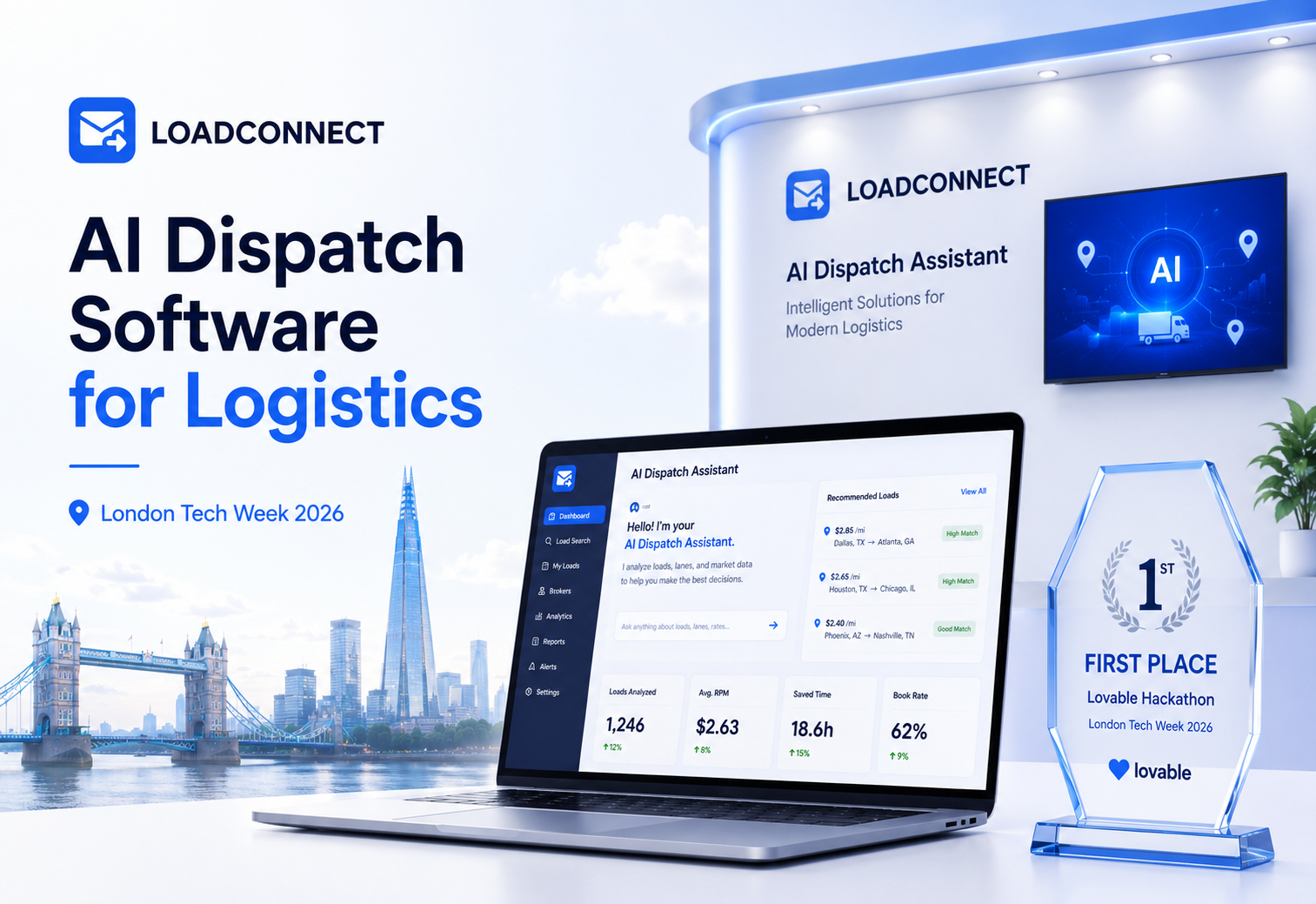
LoadConnect is not a load board. It is a decision layer built on top of existing freight load boards and broker workflows.
Instead of requiring dispatchers to manually evaluate every available load, it processes the full decision environment before a choice is made.
How LoadConnect Works in Practice
LoadConnect integrates directly into existing dispatch workflows and evaluates freight in real time across multiple sources.
It analyzes:
- loads across multiple trucking load boards
- broker emails and inbound offers
- lane and market conditions
- deadhead exposure
- positioning impact
- reload probability
LoadConnect also brings broker intelligence directly into the evaluation process, allowing dispatchers to review broker information without interrupting the booking workflow. Instead of switching between multiple systems to verify brokers, key information is available during the load evaluation stage, helping carriers move faster while maintaining operational confidence.
Then it adds a layer traditional load boards do not provide: It ranks freight by expected operational outcome, not just visible rate or RPM. For example, instead of manually copying rates into spreadsheets and estimating profitability separately, dispatchers using LoadConnect can instantly see RPM calculations, deadhead impact, and total trip economics directly inside the load board workflow.
What Changes for Dispatchers
With LoadConnect, dispatching shifts from manual evaluation to structured decision support.
Instead of:
- scanning hundreds of similar loads
- calculating RPM manually
- guessing reload outcomes
- making isolated decisions under time pressure
Dispatchers see:
- a short list of ranked freight opportunities
- filtered by total trip value
- pre-screened for margin risk and inefficiency
When a profitable load is identified, dispatchers can immediately contact brokers through built-in communication tools without switching between platforms. This reduces response time, keeps the workflow centralized, and helps carriers secure opportunities before they disappear from the market. The dispatcher remains in control. But the cognitive load of evaluation is significantly reduced.
LoadConnect handles analysis. Dispatchers focus on execution and final judgment.
Why This Matters Economically
Most carriers do not lose money on clearly bad loads.
They lose margin through:
- slightly inefficient positioning
- avoidable deadhead accumulation
- weak reload chain selection
- inconsistent dispatch decisions across teams
These are not visible failures. They are small inefficiencies that compound across thousands of dispatch decisions.
LoadConnect reduces this “decision leakage” by introducing structure into freight evaluation.
It does this by:
- standardizing how loads are evaluated
- filtering structurally weak opportunities early
- improving consistency under time pressure
- aligning decisions with total trip profitability rather than single-load RPM
It does not increase freight supply. It improves how existing freight is used inside dispatch operations.
The Future of AI Truck Dispatch Software
The trucking industry is moving from manual load selection toward decision intelligence.
For years, competitive advantage in freight operations came from better access - more freight visibility, stronger broker networks, and faster load discovery. That era is now coming to an end.
Dispatching is now constrained by a structural problem: too many available options, too little time, and too much downstream impact tied to every decision.
In this environment, traditional dispatch workflows cannot scale effectively.
The future of dispatching is not full automation. It is AI-assisted decision intelligence.
Humans remain essential in areas that require judgment and relationships:
- negotiation with brokers
- carrier–shipper relationships
- operational exception handling
- real-world decision accountability
But the evaluation layer - the process of analyzing freight options - is increasingly becoming system-driven.
The companies that adapt early will gain measurable operational advantages: faster decision cycles, more consistent margins, reduced inefficiency, lower dispatcher overload, and more scalable dispatch operations.
Those that do not will face increasing operational pressure: reactive decision-making, inconsistent profitability, growing complexity, and ongoing decision fatigue.
The shift is simple: Load boards created visibility. AI creates intelligence.
And in the next phase of trucking, high-performing carriers will not be defined by access to freight. They will be defined by how effectively they decide what to do with it.
That transition has already begun.
Stop losing margin in small decisions. Start optimizing every mile with LoadConnect.