What Are the Best Load Boards for Truckers?

In the world of freight, having the right information can make all the difference. One successful run can set the tone for a week, while a missed opportunity leaves a truck idle and revenue on hold. Today, the best load boards are more than listing platforms - they are operational tools that influence decision-making speed, load consistency, and competitiveness. Some professionals prioritize instant responses and automation, while others focus on transparent rates and reliable partners.
The freight market has changed dramatically: competition is higher, margins tighter, and booking speed now determines success. Loads that once stayed available for hours are now claimed in minutes. Outdated workflows or slow communication can quickly turn opportunity into lost revenue.
There is no single load board that works perfectly for everyone. The top platforms for carriers, owner-operators, and brokers depend on operational style, routes, and control over pricing and communication. Understanding these differences is key to choosing a board that supports your business - rather than forcing you to adapt to someone else’s system.
What Is a Load Board?
At its core, a load board is a digital marketplace where freight meets available trucking capacity. Brokers and shippers post loads, while carriers search, compare, and book freight that fits their routes, equipment, and rates. For many professionals, this tool bridges the gap between empty miles and paid work.
Loads are published in real time with key details: pickup and delivery locations, equipment requirements, rates, and timing. Carriers can filter by lane, distance, trailer type, or rate, then contact the broker or book directly through the platform. Top-rated boards streamline this process, reducing back-and-forth communication and helping users move from search to confirmation quickly - a crucial advantage in a fast-moving market.
The load board ecosystem includes brokers, shippers, and carriers of all sizes. Brokers match demand with available trucks, shippers gain market exposure, and carriers keep trucks moving and revenue predictable. High-quality boards give owner-operators flexibility to select loads that fit their preferred routes, schedules, and profitability goals.
Ultimately, load boards are more than listings - they are operational tools. The best broker-focused platforms reduce friction, improve visibility, and help all parties execute freight transactions faster and more efficiently.
How Load Boards Work for Truckers and Carriers
For truckers and carriers, working with load boards follows a predictable flow - but the real difference lies in how smoothly that flow runs. On the leading load boards for truckers, every step is designed to minimize friction between spotting a load and securing it.
The process usually begins with searching the board. Carriers filter available freight by lane, equipment type, pickup time, and rate. Once a suitable load appears, the next step is immediate outreach - often by email, platform message, or phone call. This is where the booking race truly begins. On the top-rated boards for carriers, speed isn’t just a feature; it’s a requirement.
Delays most often occur after the initial match. Brokers may receive dozens of inquiries for the same load, carriers may wait for replies, or rate confirmations can stall due to manual follow-ups and document checks. Even small delays - a missed email, late response, or slow back office - can cause a load to disappear. For owner operators, these delays are especially costly, as one missed booking can mean hours or days of idle time.
Response time matters because load boards operate on a first-ready, best-prepared basis. Brokers naturally move forward with carriers who respond quickly, provide complete information, and appear easy to work with. This is why the top load boards increasingly favor tools that accelerate communication and reduce manual steps. In today’s market, being fast is no longer optional - it’s the difference between securing profitable freight and watching it go to someone else.
Types of Load Boards
Not all load boards are built the same, and understanding the differences is key to choosing the right tool for your operation. From free listings to advanced digital platforms, each type serves a specific purpose depending on experience level, freight volume, and business goals.
Free Load Boards
Free boards are often the first stop for new carriers and owner-operators. They provide basic access to available freight without upfront costs, making them useful for testing lanes, filling occasional gaps, or getting started in the industry. In some cases, free boards can help truckers quickly find last-minute loads or explore new markets.
However, these platforms have clear limitations. Load volume is usually lower, rates are less transparent, and competition can be intense. Many lack verification tools, automation, or fast communication options, which can lead to delays and missed opportunities. For carriers seeking consistent work, free boards rarely rank among the leading load boards for truckers in the long term.
Paid Load Boards
Paid boards unlock a more professional environment. With subscription access, carriers gain visibility into higher-quality freight, more detailed load information, and faster booking workflows. These platforms often include advanced filters, broker credit insights, and priority access to loads - features that define the best load boards for carriers and the top-rated boards for owner operators.
Most professional carriers rely on paid boards because they reduce uncertainty. Better data, fewer surprises, and faster response cycles translate directly into improved profitability. In a competitive market, paid platforms are not just tools - they are operational advantages.
Digital Freight Platforms
Digital freight platforms go a step further by combining load boards with automation and workflow tools. Unlike traditional boards that focus primarily on listings, these platforms streamline the entire freight lifecycle - from discovery to booking and follow-up. This is where technology reshapes how the top load boards operate today.
These platforms are especially effective when speed and efficiency matter most. Carriers looking to scale, reduce manual communication, or secure loads faster often find digital solutions a strong fit. While they may not replace every traditional load board, they represent a growing segment of the market - one that aligns with how modern freight businesses operate.
How to Choose the Right Load Board
Choosing the right load board is less about popularity and more about fit. The best load boards for truckers are those that align with your lanes, equipment, and operating style - not necessarily the platforms with the most marketing buzz. A carefully selected board becomes more than a listing site; it’s a tool that helps carriers and owner-operators turn opportunity into consistent revenue.
Load availability and coverage
A strong load board consistently offers freight in the regions you operate. National coverage may sound appealing, but density on your core lanes matters most. High load volume without relevance leads to wasted time, while focused coverage boosts booking efficiency and revenue stability. Platforms that combine breadth with relevance are the real winners for both growing fleets and independent drivers.
Freight types and equipment compatibility
Not every board serves all equipment equally. Some platforms excel in dry van and reefer loads, while others specialize in flatbed or specialized freight. For owner operators, the most effective boards clearly match equipment types with real demand, reducing the time spent filtering out irrelevant listings and ensuring each opportunity is actionable.
Competition and booking speed
High competition is a double-edged sword. Popular platforms often offer more loads, but they also attract more carriers chasing the same freight. On leading load boards for carriers, booking speed becomes a decisive factor. Tools that reduce response time, automate outreach, or simplify communication give carriers a critical edge and help avoid lost opportunities.
Cost and return on investment
Subscription cost should always be evaluated against results. A higher monthly fee can be justified if it leads to faster bookings, better-paying loads, and fewer empty miles. The best load boards for carriers provide measurable ROI - not just access to listings, but streamlined workflows and real profitability.
Broker transparency and reliability
Trust is non-negotiable. Reliable boards provide visibility into broker credentials, payment history, and credit scores. This transparency protects carriers from unpaid invoices and last-minute cancellations. The most trusted broker-oriented platforms prioritize accountability, creating a safer environment for all parties.
Overview of Major Load Board Platforms
Several platforms consistently dominate the conversation when discussing the best load boards for truckers. Each serves a different segment of the market, and understanding their strengths and limitations allows carriers to use multiple boards strategically rather than relying on a single solution.
DAT Load Board
Best use cases: DAT is widely used by mid-sized and large carriers running consistent lanes across the U.S. It’s ideal for those seeking high freight volume.
Strengths: Extensive load availability, advanced filtering, and strong market data. Rate insights help carriers negotiate more effectively, making DAT one of the most data-driven platforms.
Limitations: High competition means popular loads are booked quickly. Smaller carriers and owner-operators may feel overwhelmed without additional workflow tools.
Truckstop
Best use cases: Well-suited for carriers who prioritize broker transparency and reliable payment. Great for long-term broker relationships.
Strengths: Strong broker verification and fraud prevention tools. Trusted by carriers for stability and reliability.
Limitations: Load volume can be more limited in some regions. Booking workflows may feel slower during peak hours when speed is critical.
123Loadboard
Best use cases: Popular among smaller carriers or those seeking cost-effective access. Useful for regional operations and filling gaps between scheduled loads.
Strengths: Lower subscription costs, simple interface, and flexibility. Works well alongside larger boards, especially for owner operators.
Limitations: Load density and broker variety can be inconsistent. Advanced automation and real-time tools are more limited.
Direct Freight
Best use cases: Ideal for spot freight and opportunistic loads. Good for carriers exploring new lanes or last-minute shipments.
Strengths: Broad access, straightforward pricing, and secondary-market visibility.
Limitations: Interface and communication tools feel dated. Without automation or response optimization, carriers may struggle to compete on speed.
Expert takeaway:
Choosing a load board is not just about its features - it’s about how well it fits into your workflow. By combining different platforms, filtering for relevant loads, and responding quickly, you can turn any board into a reliable source of consistent revenue.
Load Board Comparison Table
Feature comparison of major load board platforms
| Feature / Platform | DAT Load Board | Truckstop | 123Loadboard | Direct Freight |
|---|---|---|---|---|
| Load volume & market coverage | Very high nationwide coverage | High, but varies by region | Moderate, mostly regional | Moderate |
| Best use cases | High-volume carriers, consistent lanes | Carriers focused on broker reliability | Small carriers, owner operators | Spot freight, backup option |
| Competition level | Very high | High | Medium | Medium |
| Booking speed | Fast, but highly competitive | Moderate to fast | Moderate | Slower |
| Broker transparency & credit data | Strong rate data, limited broker focus | Excellent broker vetting and credit checks | Basic broker info | Limited |
| Advanced filters & search tools | Yes (very advanced) | Yes | Basic | Basic |
| Automation & workflow tools | Limited native automation | Limited | Minimal | Minimal |
| Ease of use | Powerful but complex | Structured and reliable | Simple and accessible | Outdated interface |
| Best fit for owner operators | Good, but competitive | Good for stability | Very good | Acceptable as secondary |
| Pricing model | Paid subscription (higher tier) | Paid subscription | Lower-cost subscription | Paid / tiered |
| Overall positioning | Industry benchmark, data-driven | Trust-focused, reliability-first | Budget-friendly supplemental board | Secondary board for flexibility |
Expert takeaway: there is no single “perfect” platform - the best load boards for truckers, carriers, and owner operators are often used together. The real competitive advantage today comes from how efficiently a carrier works across these boards: responding faster, managing outreach smarter, and reducing manual effort.
Why Speed and Trust Matter More Than the Platform
In today’s freight market, access alone is no longer enough. Even the best load boards for truckers cannot guarantee success if speed and trust are missing from the booking process. The reality is simple: profitable loads don’t wait - and brokers don’t either.
Why high-paying loads disappear quickly
High-quality freight attracts immediate attention. On the top load boards, well-priced loads often receive multiple inquiries within minutes of being posted. Brokers naturally move forward with the first carrier who responds professionally, provides complete information, and appears ready to book. By the time another carrier finishes checking details or drafting an email, the opportunity is often gone.
How manual checks slow decisions
Many carriers still rely on manual workflows - switching between tabs, copying load details, checking broker credentials, and composing outreach messages one by one. While each step may seem small, together they create delays that cost real money. Even when using leading load boards for carriers, slow internal processes can erase the platform’s advantages and leave trucks sitting idle.
How trust impacts booking success
Trust is a silent but decisive factor in freight booking. Brokers prefer working with carriers who respond quickly, communicate clearly, and have a reputation for reliability. Transparent information, verified credentials, and consistent follow-ups build confidence - and confidence leads to bookings. This is why trusted broker-oriented platforms emphasize accountability, and why carriers who act fast and stay organized consistently win more loads.
Ultimately, the difference between securing freight and missing it often comes down to execution. Speed gets attention. Trust closes the deal. In a market where seconds matter, the tools that support both are often more important than the platform itself.
Load Boards Within a Smarter Freight Workflow
Load boards play a crucial role in modern freight operations, but their true value lies in what they enable, not where the process ends. Even the best load boards for truckers are only the starting point - sources of opportunity rather than complete solutions.
Load boards as opportunity sources
At their core, load boards exist to surface available freight. They help carriers see what’s on the market, compare options, and identify profitable lanes. In this sense, the top load boards function like high-traffic marketplaces: full of opportunity, but also full of competition. Finding a good load is important - securing it efficiently is what turns opportunity into revenue.
What happens after a load is found
Once a load is identified, the real work begins. Carriers and dispatchers must act fast: verify broker details, confirm availability, negotiate terms, and communicate readiness. This phase is where delays most often occur. Manual emails, repetitive data entry, and fragmented communication slow momentum and increase the risk of losing the load - even when working with leading load boards for carriers.
How Workflow Tools Like LoadConnect Reduce Friction
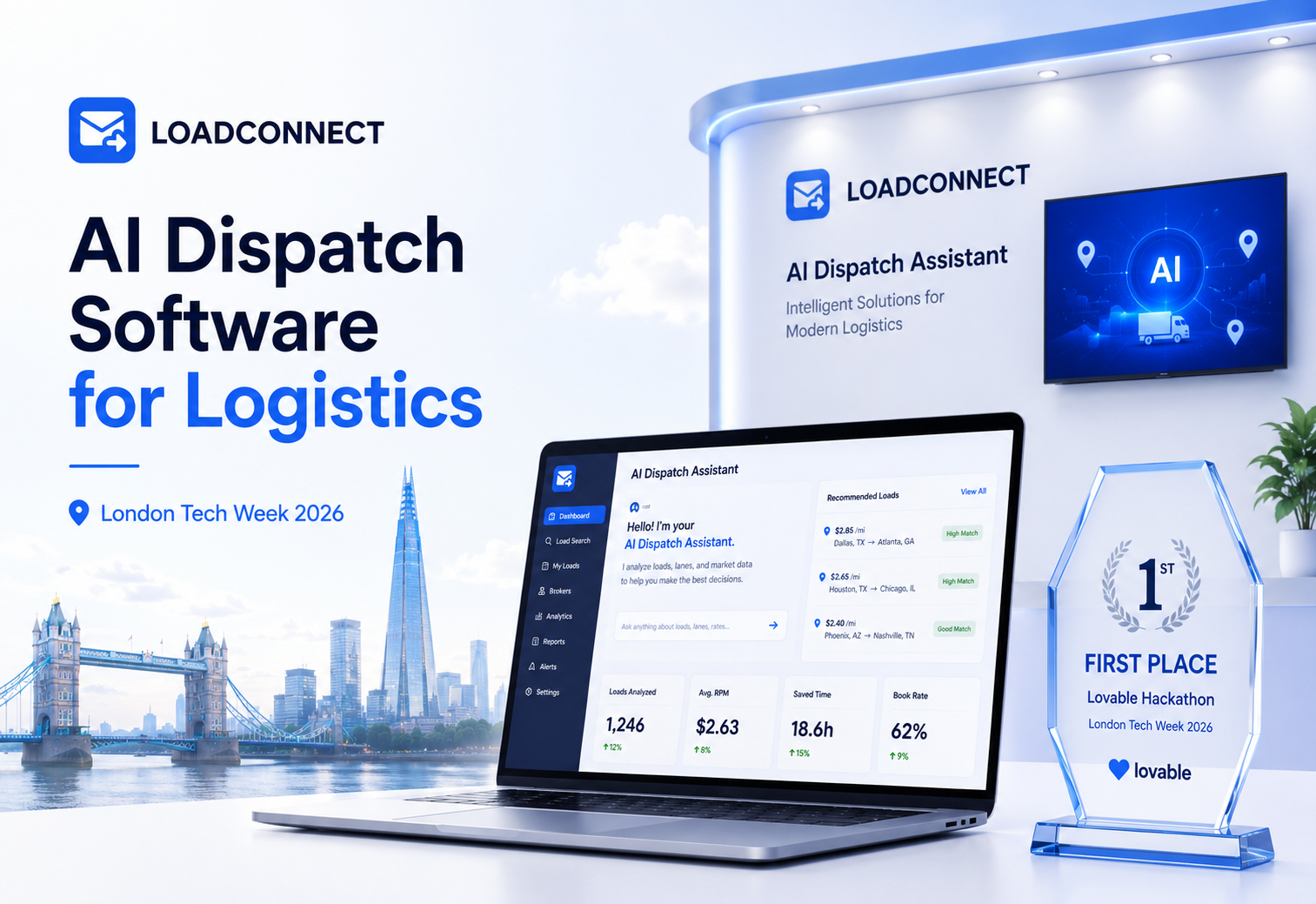
In today’s freight market, simply having access to load boards no longer guarantees success. The key factors are speed of response, transparency of information, and reliability in working with carriers and brokers. This is where workflow management tools like LoadConnect come in - they don’t replace load boards, but significantly enhance the efficiency of working with them by eliminating bottlenecks and speeding up the booking process.
Centralizing Communication and Automating Routine Tasks
One of the main challenges when working with load boards is constantly switching between tabs, copying load details, composing emails or doing manual calls. LoadConnect solves this problem by centralizing all communications in a single interface. Dispatchers can:
- Send personalized emails in one click, using dynamic variables for each load.
- View your load history and gain insights to improve using AI-driven platform.
- Export carrier lists with the required fields to streamline team outreach and booking.
This centralization accelerates workflows and allows opportunities to be processed faster.
Reducing Response Time
In a market where high-paying loads can be booked within minutes, speed of response is critical. LoadConnect improves efficiency by:
- Providing message templates and broker data integration, allowing near-instant reactions.
- Sending automatic notifications when key carrier information changes - such as insurance, authority status, contact details, or risk signals.
- Displaying all essential information directly on the load board, without the need to switch between windows or tabs.
The result: dispatchers and carriers can book loads faster, reducing the risk of missing profitable opportunities.
Comprehensive Carrier and Broker Verification and Data Transparency
LoadConnect provides instant carrier verification and reliability checks:
- MC and DOT lookup shows authority status and FMCSA safety data.
- The tool automatically monitors insurance, authority, and risk factors, notifying users of any changes.
- Access to verification history allows users to compare multiple carriers at once and make informed decisions quickly.
For brokers, this means fewer incomplete inquiries and faster confirmations. For carriers and owner-operators, it results in more predictable bookings and reduced idle time.
Transparency and Control over Workflow
LoadConnect offers a complete overview of carrier interactions, enabling users to:
- Set priorities for verification, such as DOT compliance, authority status, or insurance limits.
- Subscribe to carriers and receive real-time updates.
- Easily filter companies by equipment type, region, operating radius, or preferred lanes.
This simplifies the selection of suitable partners and reduces the risk of working with unreliable carriers.
Even the best load boards only provide opportunities. Ultimately, success goes to those who not only see a load but can secure it quickly, minimizing friction and manual work at every step.
Practical Tips for Using Load Boards More Effectively
Using load boards effectively isn’t just about logging in and browsing listings - it’s about strategy, speed, and smart decision-making. Even with access to the best load boards for truckers, carriers and dispatchers can maximize results by approaching the workflow intentionally.
Using multiple platforms strategically
No single platform covers every lane, load type, or broker. Combining a mix of free, paid, and digital freight boards allows carriers to expand opportunities without over-relying on one source. By using complementary boards, dispatchers and owner-operators can balance volume, reliability, and cost-effectiveness while minimizing downtime.
Reducing deadhead miles
One of the most common inefficiencies is driving empty miles between loads. Effective load board use involves filtering for nearby or return-trip freight, planning routes in advance, and leveraging platform tools to identify opportunities along existing lanes. This approach saves fuel, time, and boosts overall profitability - a priority for anyone seeking the best load boards for carriers.
Evaluating loads before outreach
Not every load is worth pursuing. Top-performing carriers quickly assess broker reliability, rate fairness, and timing before committing. Developing a consistent evaluation routine helps avoid wasted effort and maintain a higher success rate. Many trusted broker load boards provide the necessary transparency and data to make these evaluations faster and more accurate.
Improving response speed without increasing risk
Fast responses are critical in a competitive market, but speed should never compromise accuracy or due diligence. Pre-filled templates, integrated broker information, and workflow tools help carriers act quickly while keeping checks in place. This balance ensures that engagement is both fast and trustworthy - the hallmark of effective use of top load boards.
Expert takeaway:
Using load boards strategically is not about working harder- it’s about working smarter. Combining multiple platforms, planning routes efficiently, evaluating loads carefully, and responding quickly with confidence can transform load boards from simple listings into consistent revenue generators.
Conclusion
Choosing the right load board isn’t just about features or popularity. The best boards deliver value when they match your routes, equipment, and business priorities. For carriers and owner-operators, load volume, broker reliability, and booking speed are as important as platform tools.
There’s no one-size-fits-all solution. The top boards depend on your strategy - whether you focus on high-volume lanes, stable broker relationships, or flexible spot freight. Smart carriers combine multiple boards and evaluate opportunities carefully to ensure consistent, profitable results.
The real advantage comes when load boards are part of a smarter workflow. By streamlining communication, reducing manual steps, and acting quickly on high-value loads, carriers and dispatchers turn opportunities into booked freight efficiently. Tools like LoadConnect enhance any platform, helping teams respond faster, build trust, and maximize revenue.
FAQ: Load Boards for Truckers and Carriers
1. How much do load boards typically cost per month?
Pricing varies depending on features, access, and market coverage. Free load boards are available but come with limitations like lower volume, fewer tools, and less broker transparency. Paid boards, often considered the best load boards for carriers, typically range from $50 to $200 per month. Higher-end subscriptions unlock advanced filters, market data, and faster booking workflows - offering real value for carriers who prioritize efficiency and consistent revenue.
2. Do load boards guarantee payment for completed loads?
No platform can guarantee payment for every load. Load boards are primarily marketplaces - the responsibility for confirming rates, broker credibility, and payment remains with the carrier and dispatcher. That said, trusted broker load boards provide verification, credit data, and tools to reduce risk, making it easier to work with reliable partners.
3. Can dispatchers use load boards on behalf of carriers?
Absolutely. Dispatchers often act as the operational bridge between carriers and brokers. Using load boards, they can search for loads, negotiate terms, and secure bookings efficiently. Platforms that support multiple user roles or workflow integration are particularly useful, allowing dispatchers to maximize truck utilization while keeping carriers focused on driving.
4. Do load boards verify brokers and carriers automatically?
Some load boards include automated verification tools, credit checks, and licensing validation. However, the level of verification varies by platform. While this adds trust and reduces risk, carriers should still perform due diligence, especially with new or smaller brokers. Using the best load boards for owner-operators ensures access to more reliable information, but vigilance is always key.
5. Can carriers negotiate rates through load boards?
Yes - many boards allow direct communication between carriers and brokers, enabling negotiation. Some platforms even display market rate benchmarks to support informed discussions. While the best load boards for truckers provide instant access to listings, the real advantage comes when carriers can quickly evaluate, negotiate, and confirm high-value loads without losing time.