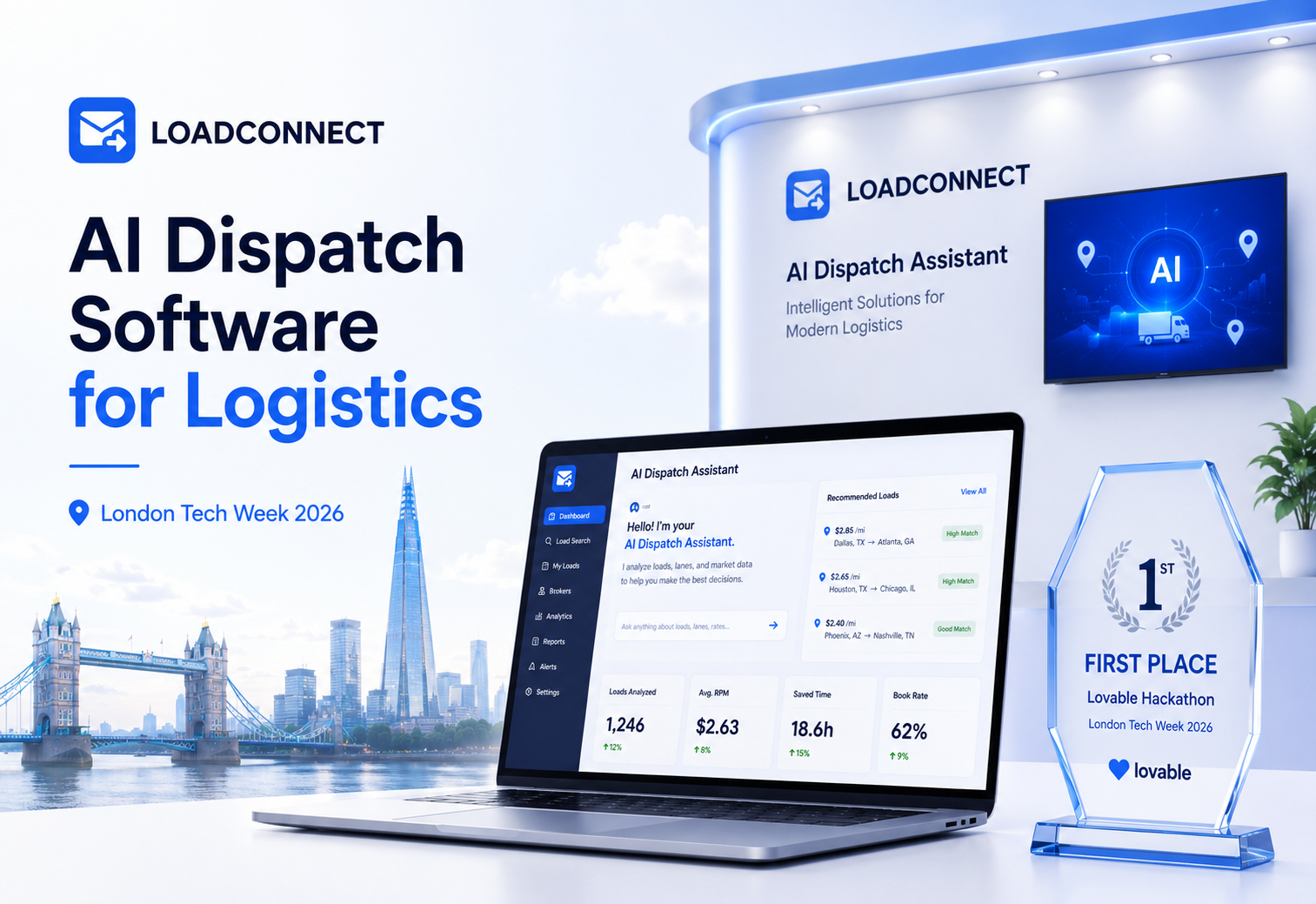
AI Dispatcher 2026: How Next-Gen AI Is Revolutionizing Truck Dispatching

For small and mid-sized carriers, the economics of trucking have never been tighter. Margins are thin. Rates are volatile. Operating costs continue to rise. And the margin for error? Almost nonexistent.
Fuel prices fluctuate. Insurance premiums climb. Equipment financing costs remain high. Meanwhile, spot rates can shift dramatically from week to week, making revenue forecasting increasingly unpredictable. In this environment, traditional trucking dispatch built on spreadsheets, phone calls, and instinct is simply too fragile.
One of the most persistent drains on profitability is empty miles. Industry data consistently shows that 16–20% of total miles driven generate zero revenue. For a small fleet, that’s not just inefficiency - it’s lost survival capital. Every unnecessary deadhead mile eats into already narrow margins.
At the same time, driver turnover remains high across the industry. When dispatching lacks structure, visibility, and intelligent load planning, drivers experience inconsistent schedules, long waits, and inefficient routes. The result? Burnout, dissatisfaction, and costly churn. Replacing a driver is expensive. Losing a reliable one can disrupt the entire operation.
Add to that the increasing complexity of compliance, documentation, and broker negotiations, and it becomes clear: manual processes cannot keep up with modern demands.
This is where dispatch AI fundamentally changes the equation.
Modern AI dispatch software is not about replacing dispatchers - it’s about stabilizing the business model. Whether integrated into broader AI dispatch and logistics platforms or implemented as specialized dispatcher AI software for trucking, intelligent systems help fleets reduce empty miles, improve load selection, and respond faster to market shifts.
An effective AI truck dispatcher doesn’t get tired, doesn’t miss data patterns, and doesn’t rely on gut feeling. It analyzes historical trends, rate behavior, lane performance, and operational metrics in real time. The result is smarter truck load dispatch, more consistent revenue per mile, and fewer costly mistakes.
For fleets still relying solely on traditional trucking dispatch software or fragmented truck dispatch systems, the gap is widening. Competitors adopting advanced freight dispatch software and AI-powered dispatch software for trucking companies are operating with better visibility, faster decision cycles, and stronger rate positioning.
In today’s market, AI-driven dispatching software for trucking is no longer a luxury upgrade. It is a structural necessity.
The reality is simple:
AI is no longer a competitive advantage. It is a survival tool.
Fleets that embrace intelligent truck dispatching software and advanced AI dispatch capabilities reduce waste, protect margins, and create operational resilience. Those that don’t risk being squeezed out by volatility, inefficiency, and mounting costs.
The pressure is real. And the fleets that adapt first will be the ones that endure.
The Evolution of the Dispatcher: From Operator to Strategist
The role of the dispatcher is not disappearing - it is transforming.
For decades, trucking dispatch was built on speed, multitasking, and instinct. The best dispatchers were the ones who could juggle calls, scan load boards, negotiate rates, and update spreadsheets - all at once. It was a constant race against time.
Yesterday’s Dispatcher
- Endless phone calls with brokers
- Scrolling through load boards hoping to find a fit
- Managing loads in Excel or basic trucking dispatch software
- Relying heavily on gut feeling and experience
Traditional truck dispatching required stamina and memory. A dispatcher had to remember which brokers paid well, which lanes were reliable, and which drivers preferred certain routes. Even with legacy dispatching software for trucking, much of the decision-making remained manual.
This model worked when markets were simpler. But in today’s high-speed, data-heavy environment, intuition alone is no longer enough.
Today’s AI-Powered Dispatcher
Modern AI dispatch software changes the nature of the job entirely.
Instead of reacting, dispatchers now operate with an AI co-pilot that enhances every decision:
- Predictive matching that identifies the most profitable loads before a truck is even empty
- Automated rate negotiation tools that analyze market data and suggest optimized counteroffers
- Real-time KPI dashboards tracking revenue per mile, deadhead percentage, broker performance, and lane profitability
- Integrated AI dispatch and logistics insights that connect operations, compliance, and financial metrics
With advanced AI dispatch systems integrated into modern freight dispatch software, dispatchers are no longer stuck in reactive mode. They are empowered to think ahead.
An intelligent AI dispatcher doesn’t replace human judgment - it strengthens it. By processing massive amounts of operational data instantly, dispatcher AI software for trucking eliminates repetitive tasks and surfaces insights that would otherwise remain hidden.
The result? Dispatchers spend less time hunting for loads and more time:
- Building broker relationships
- Supporting drivers
- Planning strategic lane coverage
- Protecting margins
Modern truck dispatch systems powered by AI transform truck load dispatch from a chaotic, manual process into a data-driven workflow. Instead of constantly putting out fires, dispatchers can focus on long-term optimization.
The key shift is this:
AI does not replace the dispatcher. It removes the chaos so the dispatcher can operate strategically.
In the era of advanced truck dispatching software and intelligent dispatch software for trucking companies, the dispatcher evolves from task manager to decision architect - from operator to strategist.
Where AI Is Transforming Dispatching: 6 Critical Areas
Artificial intelligence is not just reshaping one part of operations - it is redefining the entire structure of modern trucking dispatch. The impact of dispatch AI extends across multiple operational layers, from routing to forecasting.
Here are the six key areas where AI dispatch software is fundamentally changing how fleets operate.
1. Route Optimization
Efficient routing has always been central to profitability. Today, AI-powered truck dispatch systems analyze:
- Real-time traffic patterns
- Weather conditions
- Road closures and restrictions
- Fuel costs and toll data
Instead of static route planning, modern AI dispatch and logistics platforms dynamically adjust routes to minimize fuel burn, reduce delays, and protect delivery windows.
The result:
- Lower operating costs
- Fewer service disruptions
- Improved driver satisfaction
This is no longer basic GPS routing - it’s intelligent, data-driven optimization embedded inside advanced truck dispatching software.
2. Load Management
At its core, dispatching is about matching the right truck to the right load. AI-driven freight dispatch software goes far beyond manual load searches. It automatically evaluates:
- Driver location
- Hours of Service (HOS)
- Equipment type
- Historical lane performance
- Revenue per mile
A modern AI truck dispatcher doesn’t just find an available load - it prioritizes profitable loads. With smart truck load dispatch capabilities, fleets reduce deadhead miles while maximizing margin potential.
This shift transforms load assignment from reactive decision-making into structured optimization within advanced dispatching software for trucking.
3. Automated Task Management
A significant portion of a dispatcher’s day is consumed by repetitive administrative work. Modern dispatcher AI software for trucking automates:
- Driver check-ins
- Load confirmations
- Email updates
- Report generation
- Scheduling adjustments
By embedding automation into dispatch software for trucking companies, fleets dramatically increase dispatcher productivity. Instead of managing paperwork and status updates, dispatchers focus on higher-value activities like negotiation strategy and operational planning.
This is where intelligent dispatching software begins to create measurable efficiency gains.
4. Real-Time Communication
Communication breakdowns are costly. Delays, misunderstandings, and missed updates lead to financial loss and frustrated drivers.
AI-enhanced truck dispatch systems enable:
- 24/7 automated load updates
- Voice-enabled broker communication
- Real-time driver notifications
- Seamless system integrations
Integrated AI dispatch platforms ensure constant visibility across dispatch, drivers, and brokers. This strengthens coordination and reduces friction across the entire operation.
Modern trucking dispatch software is no longer a static board - it’s a live operational command center.
5. Predictive Analytics
This is where AI becomes transformational rather than incremental. Advanced AI dispatch software analyzes historical and real-time data to:
- Predict profitable lanes
- Identify broker behavior patterns
- Monitor KPIs such as revenue per mile and deadhead percentage
- Detect operational bottlenecks
Predictive intelligence allows fleets to plan proactively rather than reactively. Instead of scrambling for loads at the last minute, dispatchers using sophisticated dispatch software for trucking companies can anticipate demand and secure higher-margin freight.
Predictive capability turns traditional truck dispatching into strategic decision-making.
6. Operational Forecasting
Beyond daily dispatching, AI enables long-term operational visibility.
Modern AI dispatch and logistics systems help fleets:
- Forecast fleet utilization
- Prevent overuse or underuse of equipment
- Balance driver assignments
- Prepare for seasonal demand shifts
With advanced forecasting built into truck dispatching software, fleets gain control over asset allocation and long-term planning.
This elevates trucking dispatch from a daily tactical function to a strategic operational framework.
The Critical Gap
While many solutions provide routing tools, automation, and basic predictive features, most platforms remain focused on operational efficiency alone.
They automate actions. But they do not always optimize strategy.
And that distinction defines the next evolution of dispatch AI.
The First Wave of AI: Process Automation
The trucking industry’s first major adoption of AI dispatch software focused on automating core operational tasks. This initial wave of dispatcher AI software for trucking solved immediate pain points, turning manual, time-consuming workflows into faster, more reliable processes.
What Has Become Standard
- AI Load Matching – Automatically identifies available loads for each truck based on location, capacity, and profitability, reducing deadhead miles and improving fleet utilization.
- Automated Calls – AI truck dispatcher systems can initiate calls or messages to brokers, confirming load availability and streamlining communication.
- AI Negotiation – Intelligent dispatch software for trucking companies can suggest or even execute initial rate negotiations within predefined parameters.
- Real-Time Tracking – Integration with GPS and telematics ensures that both dispatchers and drivers have instant visibility into the status of every load.
- HOS Alerts – Automated monitoring of driver Hours of Service prevents violations, protects compliance, and keeps operations safe.
This first wave of automation became the baseline for modern trucking dispatch software and truck dispatch systems. Fleets that implemented these capabilities saw immediate gains in dispatcher productivity, reduction of routine errors, and improved communication with drivers and brokers.
However, while AI load matching and HOS alerts improved efficiency, most solutions remain focused on day-to-day operations. They address repetitive tasks but rarely provide insights into lane profitability, broker performance, or long-term strategic planning.
This gap sets the stage for a comparative market analysis, highlighting which AI dispatch and logistics platforms go beyond operational automation and deliver true strategic advantage.
Comparing AI Tools for Trucking in 2026
The market for AI dispatch software has grown rapidly, offering fleets a variety of solutions to automate and optimize operations.
Market Comparison Table
While the industry is rapidly adopting truck dispatching software, very few solutions provide a truly data-driven, profit-focused approach - making intelligent AI like LoadConnect a differentiator for fleets that want to turn operational efficiency into real, measurable business results.
The Second Wave of AI: From Speed to Strategy
The first wave of AI dispatch software focused on speed and automation - matching loads, automating calls, and tracking HOS. While these improvements increased efficiency, they addressed only operational performance, not strategic profitability.
Three Levels of AI in Dispatching
- Level 1 – Automation
- Automates repetitive tasks like truck load dispatch, check-ins, and confirmations
- Reduces dispatcher workload but does not optimize revenue
- Level 2 – Predictive Analytics
- Anticipates profitable lanes, broker behavior, and fleet utilization
- Moves dispatchers from reactive decisions to proactive planning
- Level 3 – Strategic Intelligence
- Integrates historical analytics, lane profitability, and operational bottlenecks
- Provides insights that align daily operations with long-term business goals
The Strategic Gap
Even the most advanced AI truck dispatcher systems often leave critical opportunities on the table:
- Matching ≠ Profitability – Just finding a load doesn’t guarantee a high-margin assignment
- Negotiations ≠ Optimal Lane – Securing a rate does not mean the route is strategically efficient
- Route AI ≠ Long-Term Planning – Optimizing a single trip is not the same as managing fleet-wide profitability over time
Modern fleets need AI that goes beyond operational dispatching software for trucking companies. They need systems that transform raw data into strategic decisions, linking every dispatch to the bigger picture of profitability, efficiency, and growth.
This is where LoadConnect and other next-generation AI dispatch and logistics platforms step in - turning automation and predictive insights into a full strategic advantage for fleets.
LoadConnect: Data-Driven AI Dispatching
For fleets looking to move beyond basic automation, LoadConnect represents a new era of AI dispatch software - one that combines operational efficiency with strategic insights.
Historical Analytics & AI Insights
LoadConnect leverages advanced analytics to examine:
- Booking history – understanding which lanes consistently deliver value
- Broker behavior – evaluating reliability, responsiveness, and negotiation patterns
- Recurring profitable routes – identifying lanes with high margin potential
- Workflow bottlenecks – spotting inefficiencies that slow dispatchers down
The benefits:
- Pinpoints the most profitable lanes
- Avoids unprofitable routes and wasted miles
- Focuses on top-performing partners
- Reduces operational errors and inefficiencies
By integrating dispatcher AI software for trucking, LoadConnect turns raw operational data into actionable intelligence, letting fleets make every dispatch count.
From Fragmented Chaos to Streamlined Workflows
Traditional truck dispatch systems often leave dispatchers juggling:
- Multiple email threads
- Load boards
- Constant broker calls
- Disconnected systems
LoadConnect centralizes these processes into a managed workflow, providing:
- Complete visibility across dispatch operations
- Centralized communication with brokers and drivers
- Streamlined task management and confirmations
The result is a transparent, linear process where dispatchers spend less time reacting and more time making strategic decisions.
Why This Matters for Small and Mid-Sized Fleets
For fleets under tight margins, LoadConnect delivers measurable impact:
- Fewer empty miles per route
- Higher revenue per mile
- Increased dispatcher productivity
- Stronger margin control
AI should not just speed up work. It should protect profitability. With LoadConnect, small and mid-sized fleets gain a true AI truck dispatcher - one that automates routine tasks, analyzes historical trends, and empowers dispatchers to operate strategically rather than reactively.
AI as a Tool for Resilience and Scaling
Beyond efficiency and profitability, AI dispatch software is becoming a critical tool for building resilient and scalable trucking operations. Modern fleets face constant pressure: fluctuating rates, driver shortages, and operational complexity. Intelligent AI dispatch systems help fleets navigate these challenges with precision.
Key Benefits of AI for Fleet Resilience
- Reduce Risk of Poor Deals – AI analyzes broker history, load profitability, and market trends to prevent low-margin assignments.
- Prevent Fleet Overload – Predictive scheduling and load balancing ensure trucks and drivers are utilized optimally without overworking resources.
- Improve Driver Retention – Automated, fair load assignments and real-time communication keep drivers satisfied and reduce turnover.
- Maintain Compliance – HOS monitoring, audit-ready records, and regulatory alerts protect fleets from costly violations.
Conclusion: The Next Stage of AI Is Integration and Intelligence
The journey of AI dispatch software moves from simple automation to strategic mastery. Each stage builds on the last:
- Automation speeds up operations and reduces errors.
- Analytics turns data into business resilience, helping fleets anticipate challenges.
- Strategic AI transforms insight into profit, guiding decisions that maximize revenue per mile and overall fleet performance.
In 2026, winning fleets will not be those who merely automated truck dispatching. The real advantage belongs to those who manage profitability through data, leveraging dispatcher AI software for trucking to turn every load, route, and broker interaction into a measurable business outcome.
Automation is fast.Analytics is resilient.Strategic AI is profitable.
Fleets that master this next stage are not just surviving - they are thriving in a market where intelligent AI dispatch and logistics is no longer optional, but essential.