Top Truck Dispatch Software & Tools for Modern Fleets

In today’s freight industry, dispatchers play a central role in keeping supply chains moving. They coordinate trucks, evaluate loads, negotiate rates, communicate with brokers, and ensure that drivers operate efficiently across constantly changing market conditions. A single decision - accepting or rejecting a load - can significantly affect profitability, driver utilization, and overall fleet performance.
The economics of trucking remain extremely tight. According to the American Transportation Research Institute’s (ATRI) 2025 operational cost analysis, the average cost of operating a truck hovers around $2.26 per mile, with non‑fuel operating expenses reaching record levels of $1.779 per mile - a 3.6 % increase year‑over‑year. At the same time, deadhead (empty miles) account for roughly 16 % of total mileage, posing a major drain on carrier profitability.
Over the past decade, the dispatching profession has undergone a significant transformation. What once relied heavily on manual processes - scrolling through load boards, calculating distances by hand, checking broker credentials separately, and managing communication through fragmented tools - has gradually evolved toward automation and digital platforms.
Today, the industry is entering a new phase: intelligent decision support.
Modern truck dispatch software and freight dispatch software are no longer limited to tracking shipments or organizing schedules. Increasingly, they are designed to help dispatchers evaluate opportunities faster, identify profitable loads, and reduce operational risk. Instead of simply managing information, these tools help translate data into actionable decisions.
However, data alone does not create value.
Freight operations generate an enormous amount of information - rates, mileage, broker history, lane performance, driver availability, and market fluctuations. But when this data is scattered across multiple systems, spreadsheets, and websites, dispatchers still face the same fundamental challenge: assembling the right information quickly enough to make the right decision.
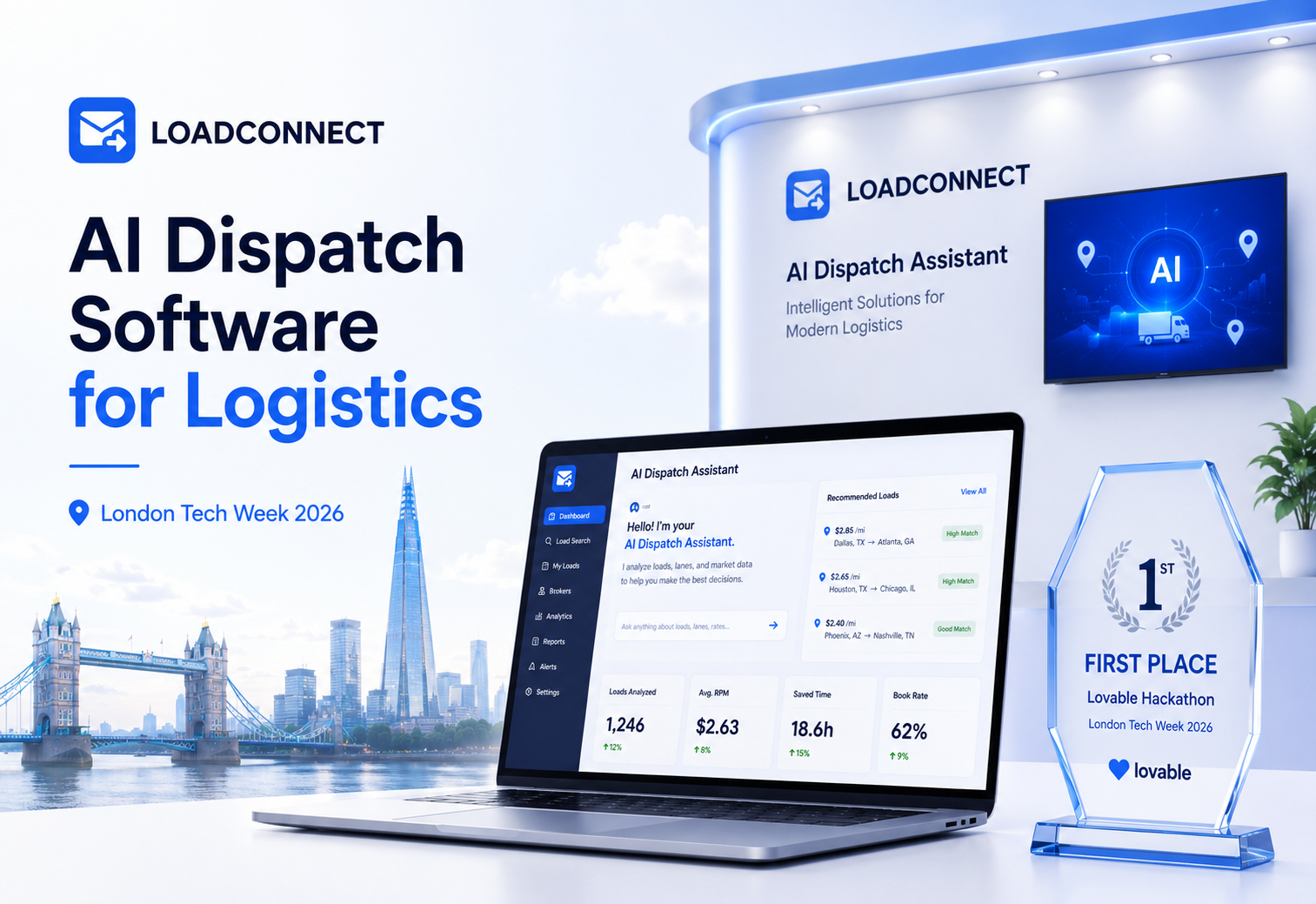
This is where workflow‑embedded platforms such as LoadConnect play a critical role. By integrating key insights - such as rate‑per‑mile calculations, deadhead analysis, broker verification, and route context - directly into the load board environment, these tools help dispatchers evaluate loads in real time without interrupting their workflow.
As a result, decision‑making becomes faster, more consistent, and more profitable. Modern freight technology is no longer just about reporting or planning. Its real value lies in how it shapes decisions at the moment they are made.
In this article, we explore the most important categories of tools used by modern dispatchers, how they support operational efficiency, and why embedded decision‑support platforms are becoming an essential component of the modern dispatch workflow.
Key Categories of Truck Dispatch Tools
When it comes to modern logistics, not all truck dispatch software is created equal. Dispatchers rely on a mix of platforms, each serving distinct purposes and offering unique strengths. Understanding these categories helps fleets choose the right combination for operational efficiency and profitability.
Transportation Management Systems (TMS)
Examples: CargoWise, McLeod, Rose Rocket
Strengths: TMS platforms provide robust operational control across dispatch, billing, compliance, and reporting, making them the backbone of fleet management. They ensure data consistency and structured workflows for medium and large operations.
Limitations: Most TMS solutions are not directly embedded into live load boards, meaning decisions are still somewhat separated from where loads are actively booked.
Takeaway: Think of TMS as the foundation - essential for managing the fleet efficiently - but not a real-time, decision-making tool on its own.
Real-Time Visibility Platforms
Examples: Project44, FourKites
Strengths: These platforms excel in predictive ETAs, exception management, and network transparency. Dispatchers gain live insights into shipments and can proactively manage delays or disruptions.
Limitations: While visibility is excellent, these tools do not accelerate the moment of load selection - they track performance after decisions are made rather than guiding them.
Takeaway: Real-time visibility tools help monitor execution but are not enough to optimize RPM, deadhead, or route profitability at the decision stage.
3. Digital Marketplaces and Rate Tools
Examples: Freightos, WebCargo
Strengths: Designed for transactional efficiency, these platforms simplify rate comparisons and streamline booking for freight dispatch software users. They provide fast access to current pricing and digital load postings.
Limitations: These tools rarely integrate into a dispatcher’s workflow, offering limited help with automation, broker verification, or structured decision-making.
Takeaway: Digital marketplaces speed up access to rates but do not replace strategic, real-time dispatch decision support.
4. Workflow-Embedded Freight Assistants
Example: LoadConnect
Strengths: This emerging category focuses on reducing decision latency by embedding intelligence directly into the dispatcher’s workflow - right inside load boards, email systems, and operational dashboards. Key functionalities include:
- AI-Enhanced Load Evaluation: Instantly analyzes RPM, deadhead, lane data, and broker insights to identify higher-profit opportunities.
- Automated Broker Verification: Conducts MC/DOT checks, authority validation, and pre-built communications, reducing risk exposure.
- Unified Dispatch Workflow: Consolidates load boards, emails, route visibility, and real-time metrics into a single interface.
- Historical Analytics & Forecasting: Surfaces trends in lane profitability, broker performance, and operational bottlenecks.
Limitations: While highly advanced, these platforms often focus on mid-sized to growing fleets that are ready to invest in strategic automation.
Speed plus accurate, real-time financial and routing intelligence turns operational efficiency into strategic profitability. With LoadConnect, dispatchers are no longer just reacting - they’re making data-driven decisions that maximize revenue per mile and reduce deadhead, all in one streamlined workflow.
Why Embedded Decision Support Matters
Modern truck dispatchers rarely evaluate loads in isolation. Their day-to-day workflow involves constantly juggling multiple systems and tasks:
- Load boards for finding and booking freight
- FMCSA verification portals for checking broker authority and safety
- Mapping tools to assess routes and distances
- Spreadsheets for cost calculations, rate comparisons, and tracking metrics
- Email for broker communication and confirmations
Every context switch adds delay, and each delay carries measurable risks:
- Missing high-margin loads
- Miscalculating deadhead miles
- Accepting suboptimal routes
- Reducing RPM (Revenue Per Mile)
In other words, having data is no longer the problem - the challenge is assembling and acting on it fast enough.
This is where workflow-embedded freight assistants like LoadConnect shine. By integrating intelligent decision support directly into the dispatcher’s environment, LoadConnect minimizes delays, reduces errors, and transforms raw operational data into actionable insights.
Dispatchers can instantly see profitability signals, deadhead estimates, and broker reliability without switching screens, enabling faster, smarter decisions. The result is not just improved efficiency - it’s strategic advantage, turning every load into an opportunity for higher margins and better fleet utilization.
Key Benefits for Carriers
Using embedded decision support in tools like LoadConnect delivers measurable advantages for trucking operations, directly impacting profitability, efficiency, and risk management. Here’s how:
More Consistent and Higher RPM
Revenue per Mile (RPM) is one of the most important performance indicators for carriers. With AI-enhanced load evaluation in truck dispatch software, dispatchers can quickly assess a load without sacrificing accuracy. This enables:
- Locking in stronger rates before the market adjusts
- Strategically choosing freight instead of reacting under pressure
- Avoiding last-minute “compromise loads” taken just to keep trucks moving
Over time, this approach creates a stable and predictable RPM, rather than volatile, situational outcomes.
Reduced Deadhead
Empty miles are a hidden cost that erodes margins. With real-time mapping, route context, and distance visibility embedded into the workflow, dispatchers can:
- See pickup distances and full route mapping instantly
- Make proactive, positioning-aware decisions
- Build more efficient freight sequences across multiple loads
The result is fewer empty miles and better asset positioning, maximizing revenue while minimizing wasted resources.
Stronger Asset Utilization
Every idle hour represents lost revenue potential. By shortening the cycle from load search → evaluation → negotiation → booking, carriers benefit from:
- Reduced downtime between loads
- Tighter scheduling of trucks and drivers
- Higher revenue per asset
Even saving 10–15 minutes per booking decision compounds over weeks and months, especially for fleets managing high load volumes. Operational velocity directly translates into measurable gains in fleet productivity.
Lower Operational Risk
The freight industry faces risks like fraud, double brokering, and compliance failures. Tools like LoadConnect integrate:
- Broker verification (MC/DOT checks, authority status, insurance validation)
- Safety and credit score insights
- Standardized operational safeguards embedded in the workflow
This ensures that protective measures are automatic and consistent, not optional steps skipped under pressure.
Stable Margins Under Market Pressure
Freight markets are cyclical and volatile. When profitability signals - including true RPM, deadhead impact, route-level profitability, and strategic lane value - are visible at the moment of load evaluation, dispatchers can make disciplined, data-driven decisions instead of reactive choices.
This consistency strengthens margin protection, even during softer market periods, giving carriers a competitive advantage without sacrificing operational speed.
Comparing Modern Truck Dispatch Tools
In today’s competitive trucking industry, not all truck dispatch software is created equal. Fleets need solutions that not only automate routine tasks but also provide real-time insights, broker intelligence, and profitability-focused recommendations. Here’s how the top tools compare:
LoadConnect
What makes it stand out:
- Combines in-board automation, historical analytics, and strategic guidance
- Embedded AI decision support helps dispatchers evaluate loads faster and more profitably
- Provides real-time RPM, deadhead visibility, route context, and broker intelligence
TruckSmarter
Strengths:
- Prioritizes speed and simplicity for small fleets and owner-operators
- Hybrid AI + human model handles load matching, basic broker communication, and verification workflows
- Great for teams that want fast execution without a full-scale TMS
Optym LoadAI
Strengths:
- Advanced AI-driven planning and dispatch optimization
- Handles hundreds of variables, including HOS, cost structures, pay models, and operational constraints
- Ideal for mid-to-large fleets (~100+ trucks) that already operate a TMS and want network-level optimization
PCS Software (Cortex AI)
Strengths:
- AI embedded directly within TMS workflows
- Offers driver-load assignment recommendations, backhaul matching, and next-best-action guidance
- Focuses on routine workflow automation while keeping dispatchers informed
Hemut
Strengths:
- Functions as a full AI-native operating system for trucking
- Automates calls, document processing, load sourcing, accounting, and operational workflows
- Designed for carriers looking for comprehensive AI automation, not just dispatch
Rose Rocket (TMS.ai)
Strengths:
- Enhances TMS workflows with AI
- Automates data entry, document processing, and operational support
- Useful for fleets that want TMS-based efficiency, but less focused on live load board decision-making
Functional Comparison Table
| Tool | In-Board Automation | RPM & Deadhead Calculation | Broker Verification | Mapping & Route Context | Structured Communication | Real-Time Visibility | Analytics & Trends |
|---|---|---|---|---|---|---|---|
| LoadConnect | ✅ Yes – embedded workflow automation directly inside load boards | ✅ Yes – real-time RPM, margin & deadhead visibility before booking | ✅ Yes – broker performance history & reliability insights | ✅ Yes – contextual route intelligence at booking stage | ✅ Yes – centralized, structured broker & driver workflows | ✅ Yes – live operational tracking & KPI dashboards | ✅ Yes – historical lane profitability & trend analysis |
| TruckSmarter | ✅ Yes – built-in load board automation | ⚠️ Partial – basic rate & load evaluation tools | ✅ Yes – verification workflows | ⚠️ Partial – standard mapping context | ⚠️ Partial – AI + human-assisted broker communication | ⚠️ Partial – load-level tracking | ⚠️ Partial – focused more on execution than trends |
| Optym LoadAI | ❌ No – operates as optimization layer (not load board-native) | ✅ Yes – advanced optimization reduces empty miles | ❌ No – depends on integrated TMS | ✅ Yes – advanced network-level route optimization | ❌ No – not communication-focused | ✅ Yes – network-wide planning visibility | ✅ Yes – predictive & operational optimization analytics |
| PCS Software (Cortex AI) | ✅ Yes – AI embedded within TMS workflows | ⚠️ Partial – operational cost awareness within TMS | ⚠️ Partial – TMS-level broker data | ⚠️ Partial – routing integrated via TMS | ✅ Yes – workflow-driven dispatcher actions | ✅ Yes – TMS-based operational visibility | ✅ Yes – embedded performance analytics |
| Hemut | ❌ No – broader AI OS beyond load boards | ⚠️ Partial – depends on workflow configuration | ❌ No – focus is automation, not broker analytics | ⚠️ Partial – not routing-centric | ✅ Yes – AI agents for calls & document handling | ✅ Yes – operational workflow visibility | ⚠️ Partial – more automation than analytics-focused |
| Rose Rocket (TMS.ai) | ❌ No – TMS-based automation | ⚠️ Partial – cost visibility within TMS | ⚠️ Partial – TMS-level data management | ⚠️ Partial – routing via integrations | ✅ Yes – structured digital workflows | ✅ Yes – TMS operational dashboards | ✅ Yes – performance analytics within TMS |
How to Choose the Right Truck Dispatch Tool
Selecting the right truck dispatch software is more than picking a system - it’s about finding a solution that fits your fleet, workflow, and business goals. Here are the key factors to consider:
1. Fleet Size and Operational Complexity
- Small fleets or owner-operators may benefit more from in-board automation and simple load evaluation tools that save time and reduce manual work.
- Larger fleets, especially those already using a TMS, need advanced AI-driven optimization that handles hundreds of variables across multiple trucks and routes.
- Choosing a tool that matches your fleet scale ensures efficiency without overcomplicating operations.
2. Need for Embedded Decision Support
- Ask whether your tool provides intelligence at the moment of booking.
- Tools like LoadConnect embed AI-enhanced load evaluation, broker verification, and route context directly into the dispatcher workflow.
- This means faster decisions, fewer errors, and more profit-focused dispatching.
3. Level of Automation and Analytics
- Evaluate how much of your workflow can be automated: load matching, communication, route visibility, RPM & deadhead calculation, and backhaul optimization.
- Analytics matter: access to historical lane profitability, broker performance insights, and predictive metrics helps dispatchers move from reactive to proactive decision-making.
- More automation + actionable analytics = more strategic, data-driven dispatching.
Common Mistakes in Choosing Truck Dispatch Software
Choosing the right truck dispatch software can make or break your fleet’s efficiency, profitability, and driver utilization. Yet, many carriers make avoidable mistakes that reduce ROI and slow operations. Understanding these pitfalls can help fleets select the best solution for their specific needs.
Ignoring Integrated AI and Embedded Decision Support
One of the most common mistakes is choosing software that only tracks shipments or manages schedules, without real-time, AI-driven decision support.
- Why it’s a problem: Manual load evaluation or reliance on separate tools for calculating RPM, deadhead, or lane profitability increases the chance of errors, slows decision-making, and reduces revenue per mile.
- Better approach: Look for platforms like LoadConnect that embed AI directly into your workflow, providing load profitability, route context, and broker verification without leaving the load board.
Overpaying for TMS Features You Don’t Use
Many fleets invest heavily in full Transportation Management Systems (TMS) thinking it’s a one-size-fits-all solution. However, not every TMS feature is relevant for every fleet.
- Why it’s a problem: Paying for complex modules that aren’t used adds unnecessary costs and complicates workflows. Smaller and mid-sized fleets often need speed and real-time insights more than extensive reporting or billing modules.
- Better approach: Evaluate which features your fleet truly needs. If your goal is faster, smarter dispatch decisions, prioritize tools with workflow-embedded automation and strategic insights over bloated TMS modules.
Relying Only on Visibility Tools
Another mistake is choosing software solely for its tracking and real-time visibility features, ignoring decision-making support.
- Why it’s a problem: Knowing where a truck is or seeing a load on a map is useful, but it doesn’t tell you whether the load is profitable, how to optimize deadhead, or which broker is most reliable. Visibility alone cannot improve margins.
- Better approach: Select dispatch software that not only provides real-time tracking but also integrates profitability signals, route intelligence, and broker analytics into the workflow.
Neglecting Scalability and Integration
Carriers sometimes choose software without considering how it will scale with fleet growth or integrate with existing systems.
- Why it’s a problem: Switching software later is costly, disruptive, and risks data loss. Lack of integration creates silos between load boards, TMS, email, and analytics, reducing operational efficiency.
- Better approach: Ensure your dispatch management software can scale as your fleet grows and seamlessly integrate with your TMS, ERP, or accounting systems.
Underestimating Training and Adoption Needs
Even the best software fails if your team doesn’t adopt it fully. Some fleets assume that dispatchers will immediately know how to leverage AI-enhanced tools.
- Why it’s a problem: Partial adoption leads to inconsistent usage, inaccurate data, and missed efficiency gains.
- Better approach: Choose platforms with intuitive UI, contextual guidance, and training resources. Tools like LoadConnect are designed for fast adoption with minimal disruption.
By addressing these pitfalls upfront, carriers can select software that reduces deadhead, improves RPM, and enables smarter, faster dispatch decisions, turning dispatch technology into a real competitive advantage.
The Future of Dispatch Technology
The evolution of truck dispatch software reflects a broader transformation happening across the logistics industry. What began as simple digital tools for scheduling and documentation has rapidly evolved into sophisticated platforms that support real-time operational decision-making.
From Planning → to Automation → to Strategic Intelligence
In the early days, dispatch technology primarily focused on planning and record-keeping. Systems helped fleets organize loads, manage documents, and track basic operational data.
The next phase introduced automation. Modern dispatch management software and transportation dispatch software began handling repetitive tasks such as load matching, scheduling, and route planning. This shift reduced manual workload and improved operational efficiency.
Today, the industry is entering a new stage: strategic intelligence.
Instead of simply automating tasks, the newest generation of trucking dispatch software actively helps dispatchers make better decisions. Artificial intelligence, predictive analytics, and real-time profitability signals are becoming core components of modern logistics technology.
AI Embedded in the Workflow
One of the most important trends shaping the future of freight dispatch software is the integration of AI directly into dispatcher workflows.
Rather than forcing teams to analyze data across multiple dashboards and spreadsheets, intelligent systems now surface insights exactly at the moment when decisions are made.
This includes:
- automatic RPM and deadhead calculations
- real-time route context and geographic positioning
- broker reliability and risk indicators
- profitability signals based on lane data and historical performance
By embedding intelligence directly into load boards and booking workflows, dispatchers can evaluate opportunities faster and with greater confidence.
Why This Shift Matters
The trucking industry operates in an environment where speed and margins are tightly connected. Loads appear and disappear quickly, rates fluctuate throughout the day, and dispatchers must constantly balance operational efficiency with profitability.
In this environment, the ability to combine speed with accurate financial signals becomes a powerful competitive advantage.
Modern dispatch routing software and dispatch tracking software are no longer just operational tools - they are becoming strategic decision platforms that help fleets protect margins, reduce empty miles, and optimize asset utilization.
LoadConnect as a Next-Generation Dispatch Platform
Platforms like LoadConnect illustrate how the next generation of truck load dispatch software is evolving.
Instead of functioning as another isolated system, LoadConnect integrates directly into the dispatcher’s daily workflow, bringing together:
- AI-enhanced load evaluation
- real-time RPM and deadhead visibility
- broker verification and risk intelligence
- route context and geographic insights
- structured communication tools for broker outreach
The goal is not to replace dispatcher expertise - but to augment it with real-time intelligence.
As logistics technology continues to evolve, the most valuable tools will not simply collect data. They will transform that data into clear, actionable decisions at the exact moment they matter most.
In that sense, the future of trucking dispatch software is not just automation. It is an intelligent decision environment where operational efficiency, financial performance, and strategic planning come together in a single workflow.
Conclusion: Dispatch Technology Is Becoming a Competitive Advantage
Today’s truck dispatch software is no longer just about organizing operations. The most effective platforms help fleets make faster, smarter, and more profitable decisions in real time.
As the industry becomes more competitive and operational costs continue to rise, carriers are increasingly relying on advanced freight dispatch software, transportation dispatch software, and dispatch management software to improve efficiency and protect margins.
However, the real transformation is happening in how these tools integrate into daily workflows.
Traditional systems such as TMS platforms remain essential for managing operations and documentation. But they are often separated from the environments where dispatchers actually make booking decisions. Newer solutions are closing this gap by embedding intelligence directly into the decision process.
This is where next-generation platforms like LoadConnect stand out.
By combining AI-enhanced load evaluation, RPM and deadhead analysis, broker intelligence, and route context directly inside load boards, LoadConnect helps dispatchers move from reactive load hunting to data-driven profit optimization.
Ultimately, the future of trucking dispatch software will not be defined by how much data it collects - but by how effectively it turns that data into actionable decisions at the moment of booking.
For carriers looking to improve operational speed, reduce risk, and maximize profitability, adopting intelligent dispatch technology is no longer optional. It is becoming a core competitive advantage in modern freight operations.
Try LoadConnect today and turn every dispatch decision into a competitive advantage.