Rate Confirmation in Trucking: How Errors Cost Carriers Money - and How Automation Fixes It

In the trucking industry, a rate confirmation (RC) is far more than a routine document - it is the formal agreement that sets the financial and operational terms for a shipment. A single carrier rate confirmation or broker rate confirmation serves as the cornerstone for revenue calculation, route planning, and compliance verification. Getting it right is essential for protecting your margins, ensuring accurate Revenue per Mile (RPM), and minimizing costly empty miles, or deadhead.
Errors in rate confirmation sheets are not just administrative - they have a direct impact on profitability and operational efficiency. Misstated rates, missing details, or discrepancies between the broker and carrier expectations can result in lost revenue, delayed shipments, and strained relationships with brokers. According to the American Transportation Research Institute (ATRI, 2025), mistakes in freight documentation and inaccurate rate confirmations can cost carriers up to 5–8% of profit per trip - a significant figure in today’s tight-margin trucking environment.
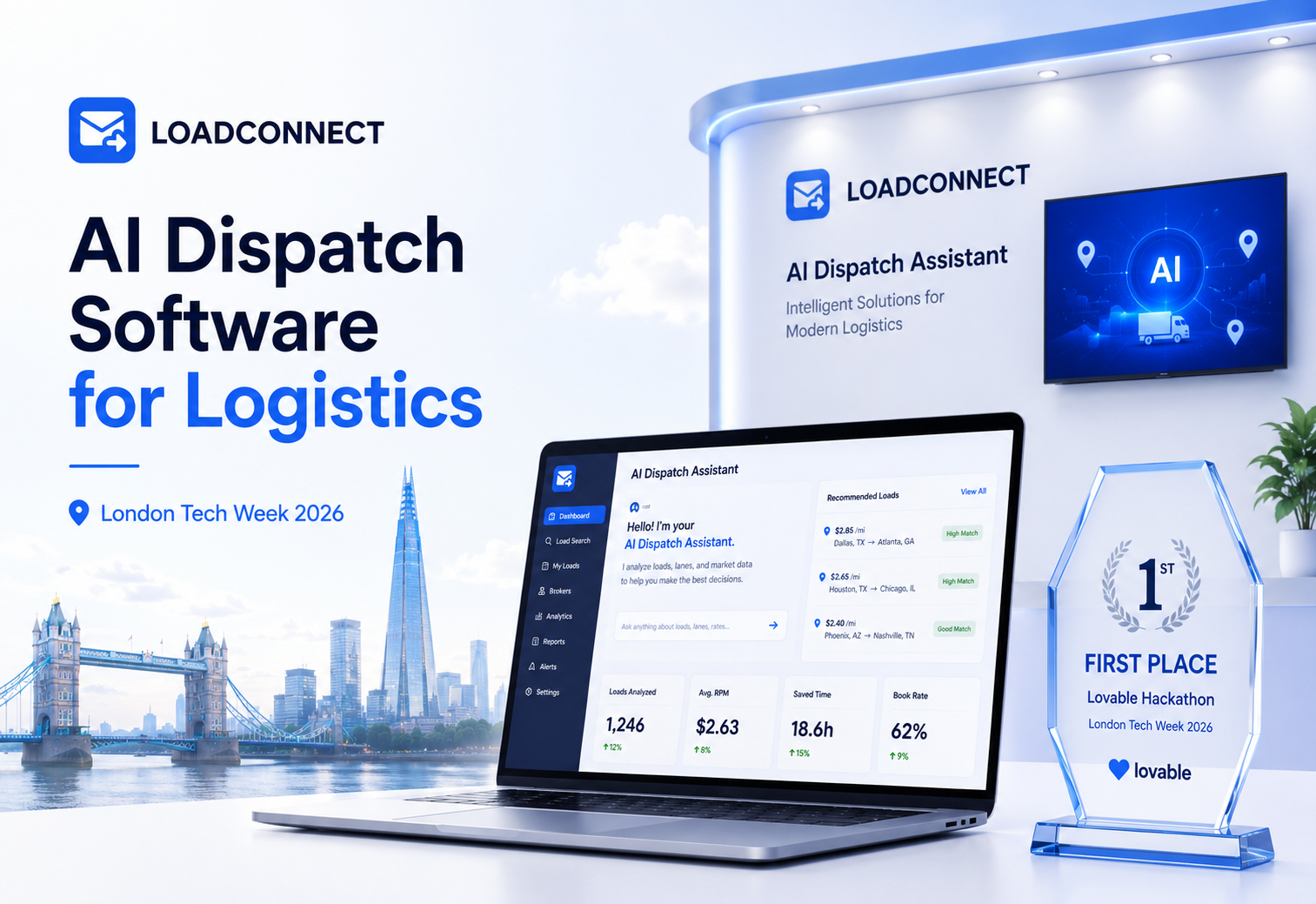
This reality makes rate confirmation automation more than a convenience - it is a strategic necessity for modern fleets. Platforms like LoadConnect integrate rate confirmation software directly into dispatch workflows, enabling carriers to verify rates, calculate profitability, and confirm broker details in real time. By embedding intelligence into every rate confirmation process, dispatchers can make faster, more accurate decisions that protect revenue and improve fleet efficiency.
In this article, we’ll explore the most common pitfalls in rate confirmation trucking, the financial and operational risks they create, and how automation and embedded decision support can transform this critical workflow into a competitive advantage.
Why Manual Rate Confirmation Checks No Longer Work
Traditionally, carriers have relied on manual rate confirmation processes - reviewing PDFs, emails, and spreadsheets - to verify rates, terms, and broker details. However, this approach is increasingly impractical for modern fleets. Manual verification can take hours per shipment and require hundreds of clicks, slowing down operations and leaving room for costly errors.
Human error is another critical concern. Mistakes in RPM calculations, deadhead estimation, or payment terms are common when relying on spreadsheets and email chains. According to Turing IT Labs, manual workflows result in low processing speed and high error rates, putting carrier revenue and operational efficiency at risk.
Consider deadhead miles as an example. The American Transportation Research Institute (ATRI, 2025) reports that empty miles account for roughly 16% of total fleet mileage. Errors in rate confirmation trucking - such as misstated rates or overlooked route details - can exacerbate deadhead, directly impacting revenue per mile and overall profitability.
This demonstrates why automated rate confirmation software and platforms like LoadConnect are no longer optional. By embedding decision support and real-time validation directly into the workflow, fleets can reduce errors, speed up load booking, and optimize routes, transforming what used to be a tedious administrative task into a strategic advantage.
Real Risks Hidden in Rate Confirmations: Costly Mistakes Carriers Should Avoid
At first glance, a rate confirmation sheet may look like a simple document confirming the agreed rate for a shipment. In reality, it often contains dozens of operational details that directly affect profitability, compliance, and the relationship between carriers and brokers.
Many of the most costly rate confirmation trucking risks are not obvious at first glance. They are hidden in small clauses, accessorial terms, or scheduling details that can easily be overlooked during manual review.
Understanding these rate confirmation mistakes is essential for dispatchers who want to protect margins and avoid costly disputes.
1. Missing or Unclear Detention Terms
One of the most common issues in a carrier rate confirmation is the absence of clearly defined detention policies. If detention time is not explicitly included in the document, carriers may not be compensated when drivers wait hours at a shipper or receiver facility.
For fleets operating on tight margins, even a few unpaid hours can significantly reduce the effective revenue per mile (RPM) for a load.
2. Incorrect or Missing Accessorial Charges
Accessorials such as detention, layover, lumper fees, fuel surcharges, or tolls are frequently included in a broker rate confirmation. However, mistakes in these fields are surprisingly common.
Sometimes accessorials are missing entirely. In other cases, they may be written in vague language that makes reimbursement difficult to enforce later.
If these details are not verified before signing the rate confirmation trucking agreement, carriers may end up covering operational costs that should have been paid by the broker or shipper.
3. Long or Unfavorable Payment Terms
Another hidden issue in many rate confirmations is extended payment terms. While standard freight payments often fall within 30 days, some rate confirmation templates include clauses that extend payment windows to 45 or even 60 days.
Dispatchers focused only on the rate itself may overlook these terms during manual review. However, delayed payments can seriously affect cash flow, especially for small fleets and owner-operators.
4. Broker Double-Booking or Conflicting Load Assignments
In rare but serious cases, a broker rate confirmation may be issued for a load that has already been assigned to another carrier. This can happen due to miscommunication, system errors, or, in worst cases, fraudulent activity.
If dispatchers do not verify broker reliability and operational history, carriers may arrive at a pickup location only to discover the load has already been taken.
5. Incorrect Pickup Windows and Scheduling Details
Timing errors are another frequent source of rate confirmation mistakes. A rate confirmation sheet may include incorrect pickup windows, unrealistic delivery schedules, or conflicting appointment requirements.
If drivers arrive outside the allowed time window - even due to incorrect information - carriers may face late arrival penalties, detention disputes, or rejected loads.
These risks illustrate why reviewing rate confirmations manually is becoming increasingly difficult for modern dispatch teams. Important details are often buried inside PDFs, emails, and long contract clauses.
This is where intelligent rate confirmation software becomes critical. By automatically extracting key fields, verifying accessorials, and checking broker reliability, automation helps dispatchers detect hidden issues before a load is accepted.
Platforms such as LoadConnect take this approach further by integrating rate analysis, broker intelligence, and route context directly into the dispatcher’s workflow. Instead of scanning every rate confirmation manually, dispatchers can quickly identify potential problems and focus on selecting the most profitable loads. LoadConnect’s Rate Confirmation Analyzer and Summarizer extracts key details, notes, and instructions within seconds, allowing dispatchers to understand the most important information without reading the entire rate confirmation document.
In a competitive freight market, identifying hidden risks early can make the difference between a profitable trip and a costly mistake.
Common Mistakes When Handling Rate Confirmations
Even experienced dispatch teams can run into problems when reviewing a rate confirmation sheet. In many cases, the issue is not a lack of effort but outdated processes that fail to keep up with the speed and complexity of modern rate confirmation trucking workflows. Avoiding the following mistakes can significantly reduce operational risks and protect carrier profitability.
1. Ignoring Intelligent Automation and Contract Validation
One of the most common mistakes is relying entirely on manual checks while overlooking the benefits of intelligent rate confirmation software. When dispatchers review every carrier rate confirmation manually, critical details - such as incorrect rates, missing accessorials, or unfavorable payment terms - can easily be missed.
Automation tools can automatically extract and validate data from a rate confirmation, compare it with historical rates, and flag inconsistencies before the load is booked. Without these safeguards, fleets risk accepting loads that are less profitable than expected.
2. Relying Solely on Visibility Tools Without Decision Support
Many fleets invest in load tracking and freight visibility tools, assuming that visibility alone will improve operational efficiency. While these systems are useful for monitoring shipments, they rarely provide the analytical context needed to evaluate a broker rate confirmation properly.
For example, knowing where a truck is located does not help determine whether the rate confirmation trucking terms actually support a profitable trip. Without RPM analysis, deadhead calculations, and broker reliability checks, dispatchers may unknowingly accept loads that reduce overall fleet margins.
3. Lack of Integration Between TMS and Load Boards
Another frequent issue is fragmented systems. Dispatchers often review a rate confirmation sheet in one platform, check broker credentials in another, and calculate RPM in a spreadsheet. This constant switching between TMS platforms, load boards, and emails increases the likelihood of errors and slows down the booking process.
Integrating these tools into a unified workflow allows carriers to verify broker rate confirmation details, route profitability, and documentation in a single environment.
By addressing these common mistakes, carriers can move toward a more efficient and data-driven approach to handling rate confirmations, improving both operational speed and financial outcomes.
How Automation Solves Rate Confirmation Challenges
Modern rate confirmation software transforms what used to be a slow, error-prone process into a fast, reliable, and fully auditable workflow. Automation addresses every major pain point in carrier rate confirmation and ensures that dispatchers make smarter, data-driven decisions.
Here’s a step-by-step look at a typical automated workflow:
- Data Extraction from PDFs and Emails – Using OCR and AI parsing, rate confirmation details are automatically captured from documents and email communications, eliminating manual copy-paste errors.
- Field Matching with TMS and Historical Data – Key fields like rates, pickup/delivery addresses, and payment terms are automatically cross-checked against the carrier’s TMS and historical lane performance.
- Validation of Payment Terms and Accessorials – Automation ensures that all accessorial charges, detention times, and payment conditions comply with pre-defined rules.
- Broker Verification – AI checks broker authority, insurance, MC/DOT numbers, and past reliability, reducing risk and preventing disputes.
- Integration into Load Board and Dispatcher Workflow – All verified information is presented directly in the dispatcher’s workflow, avoiding context switching and enabling faster load evaluation.
Key Benefits of Automated Rate Confirmation:
- Up to 70% reduction in processing time and human errors
- Instant assessment of load profitability, including RPM and deadhead impact
- Real-time verification of all RC terms and broker credentials
- Improved operational efficiency and better asset utilization
Platforms like LoadConnect take automation further by embedding AI-powered decision support directly into the dispatcher workflow. This allows carriers to verify rates, brokers, and routes without switching between emails, spreadsheets, and TMS systems, transforming rate confirmation from a tedious task into a strategic advantage for the fleet.
Manual vs Automated Rate Confirmation Workflow
| Process Step | Manual Workflow | Automated Workflow |
|---|---|---|
| 📥 Receiving Rate Confirmations | Dispatchers receive rate confirmation sheets via email or load boards and manually download PDF documents | Rate confirmations are automatically captured from emails, load boards, or integrations and imported into the system |
| 📄 Data Extraction | Dispatchers manually read the rate confirmation trucking document and enter data into spreadsheets or TMS | AI and OCR automatically extract key fields such as rates, pickup locations, delivery windows, and payment terms |
| 🔍 Broker Verification | Dispatchers manually check broker MC/DOT authority, insurance status, and reputation across multiple websites | The system automatically verifies broker authority, insurance, and reliability through integrated databases |
| 📊 Profitability Analysis | Dispatchers calculate Revenue per Mile (RPM) and deadhead manually using external tools or spreadsheets | Automated systems instantly calculate RPM, deadhead miles, and estimated load profitability |
| ⚠ Risk Detection | Hidden risks such as missing detention clauses or incorrect accessorials may go unnoticed | AI automatically flags suspicious rates, unusual terms, and missing accessorial charges |
| ⏱ Processing Time | Reviewing one carrier rate confirmation may take several minutes or longer depending on complexity | Automated systems can analyze and validate rate confirmations in seconds |
| 🚛 Decision Making | Decisions rely heavily on dispatcher experience and manual analysis | AI-assisted tools provide recommendations based on historical data and operational insights |
How to Choose the Right Rate Confirmation Software
As freight operations become more complex, choosing the right rate confirmation software is becoming a critical decision for carriers. The goal is not simply to digitize documents but to create a system that helps dispatchers evaluate rate confirmations faster, more accurately, and with better profitability insights.
When evaluating a platform for managing rate confirmation trucking workflows, fleets should focus on several key capabilities.
1. Automated Document Parsing (OCR + AI)
Modern rate confirmation sheets usually arrive as PDFs or email attachments. Manually reviewing every document takes time and increases the risk of missing important details.
The best rate confirmation software uses OCR and AI-based parsing to automatically extract key data such as:
- rate per load
- pickup and delivery locations
- payment terms
- accessorial charges
- appointment windows
This allows dispatchers to instantly analyze a carrier rate confirmation without manually copying information into spreadsheets or TMS systems.
2. Broker Verification and Compliance Checks
A reliable platform should also include broker verification tools. Every broker rate confirmation should be validated against key regulatory and compliance data.
Important checks include:
- MC/DOT authority verification
- insurance status and coverage limits
- broker operational history and reliability
Automating these checks helps carriers avoid working with high-risk brokers and reduces exposure to fraud or double-brokering schemes.
3. Profitability Analytics (RPM and Deadhead)
The rate listed on a rate confirmation does not automatically guarantee profitability. Dispatchers must evaluate the load within the broader context of fleet operations.
Advanced platforms calculate critical metrics such as:
- Revenue per Mile (RPM)
- deadhead miles before pickup
- estimated operational costs
- historical performance on similar lanes
These insights help dispatchers determine whether a rate confirmation trucking agreement truly supports profitable operations.
4. Integration With Load Boards and Dispatcher Workflow
One of the biggest inefficiencies in traditional workflows is constant switching between systems. Dispatchers may check load boards, emails, spreadsheets, and TMS platforms separately when reviewing a rate confirmation template.
The most effective solutions integrate directly with load boards and dispatcher tools, allowing users to analyze a rate confirmation sheet within the same environment where they search for and book loads.
This dramatically improves speed and reduces the likelihood of manual errors.
5. Real-Time Decision Support
The most advanced platforms go beyond simple document processing and provide real-time decision support. Instead of just displaying information, these systems help dispatchers interpret it.
AI-powered tools can:
- highlight potential issues in a rate confirmation
- flag unusual rates or risky broker terms
- estimate profitability before accepting the load
Solutions such as LoadConnect demonstrate how this approach works in practice. By combining AI-driven load evaluation, broker intelligence, RPM analysis, and route context directly inside the dispatcher workflow, platforms like LoadConnect allow teams to evaluate rate confirmations quickly and confidently without switching between multiple systems.
Comparative Table: Rate Confirmation Automation Tools
| Platform | Main Purpose | Automation Capabilities | Broker Verification | Profitability Analysis | Best Fit |
|---|---|---|---|---|---|
| LoadConnect | AI-powered platform designed to help dispatchers evaluate loads and process rate confirmations directly within their workflow | AI-driven parsing of rate confirmations, automated validation of load terms, and integrated dispatcher decision support | ✅ Broker reliability insights, verification of operational history | ✅ Real-time Revenue per Mile (RPM) calculations and deadhead analysis | Dispatch teams and carriers looking for intelligent decision support inside load boards |
| Nanonets | Document automation platform that extracts structured data from logistics documents such as rate confirmations | OCR-based extraction of data from PDFs and email attachments, automation of document processing workflows | ⚠️ Limited - verification requires external systems | ⚠️ Basic analytics through integrations | Companies automating document processing and data extraction workflows |
| Wend AI | Freight document automation solution designed for parsing logistics documents at scale | AI-based extraction of shipment terms, rates, and accessorials from rate confirmation sheets | ⚠️ Partial validation depending on configuration | ⚠️ Limited built-in analytics | Freight brokers and logistics companies handling large volumes of shipment documents |
| Tai TMS | Transportation Management System designed to manage freight operations end-to-end | Automated generation and management of rate confirmations within the broader shipment workflow | ✅ Broker validation through TMS integrations | ✅ Operational reporting and shipment analytics | Carriers that need a full TMS platform with integrated documentation workflows |
| Trucker Tools | Carrier mobile platform connecting drivers, brokers, and freight marketplaces | Digital booking and automated rate confirmation distribution | ⚠️ Limited verification features | ⚠️Rate intelligence available via integrations | Owner-operators and small fleets using mobile-based freight platforms |
What These Tools Do Differently
Modern rate confirmation software falls into three categories:
1️. Document Automation Tools
Platforms like Nanonets or Wend AI focus primarily on extracting data from rate confirmation documents using OCR and AI parsing. These systems convert unstructured PDFs into structured data that can be sent to a TMS or accounting system.
2. Full Transportation Management Systems
Tools such as Tai TMS integrate rate confirmations into a broader freight workflow, including shipment management, quoting, and tracking.
3. Dispatcher Decision Platforms
Next-generation tools like LoadConnect embed profitability analysis, broker intelligence, and route context directly into the load-booking workflow, helping dispatchers evaluate loads faster and reduce operational risk. Broker intelligence includes automated verification of MC/DOT numbers, insurance status, and historical broker reliability, allowing dispatchers to quickly assess whether a broker is legitimate, financially stable, and safe to work with before accepting a load.
Key Takeaway
When comparing rate confirmation tools, the biggest difference is not just automation - but decision intelligence.
Basic automation tools can extract data from a rate confirmation sheet, but advanced platforms help carriers:
- verify broker reliability
- evaluate RPM and deadhead
- detect hidden risks in RC terms
- make faster booking decisions
For fleets operating in competitive freight markets, this shift from document processing → intelligent decision support is becoming a major operational advantage.
Best Practices for Handling Rate Confirmations
Even with advanced rate confirmation software, establishing clear operational practices is essential for protecting margins and preventing disputes. A well-structured carrier rate confirmation workflow ensures that every load is verified accurately before it is booked or dispatched.
1. Verify Rates Against Contracts and Historical Data
The first step in reviewing a rate confirmation sheet is confirming that the agreed rate matches the original negotiation and any contract terms in place. Comparing the rate to historical lane data can also reveal inconsistencies. If the rate appears unusually low - or unexpectedly high - it may signal a data entry mistake or a misunderstanding with the broker.
2. Automatically Validate Broker Authority (MC/DOT) and Insurance
A reliable broker rate confirmation should always be backed by verified credentials. Checking the broker’s MC/DOT authority, insurance status, and operational history helps reduce the risk of fraud, payment delays, or double-brokering schemes. Automated verification tools can perform these checks instantly, ensuring that dispatchers work only with legitimate partners.
3. Review Accessorials, Penalties, and Payment Terms
Important details are often buried in the fine print of a rate confirmation trucking document. Accessorial charges - such as detention, layover, or fuel surcharges - must be clearly defined. Dispatchers should also confirm payment terms, penalties for missed appointments, and any special handling requirements. Missing these details can lead to unexpected costs that reduce overall revenue per mile (RPM).
4. Integrate All Checks Into a Single Workflow
The most effective approach is to consolidate these verification steps into one streamlined workflow rather than scattering them across emails, spreadsheets, and multiple systems. Modern rate confirmation software platforms - such as LoadConnect - allow carriers to verify rates, broker credentials, and shipment conditions directly within the dispatcher’s environment.
By integrating these checks into a unified process, fleets can reduce errors, accelerate load confirmation, and ensure that every shipment aligns with profitability and compliance goals.
FAQ: Rate Confirmations in Trucking
What is a rate confirmation in trucking?
A rate confirmation is a document issued by a freight broker that confirms the agreed terms of a shipment between the broker and the carrier. A typical rate confirmation sheet includes key details such as the freight rate, pickup and delivery locations, appointment times, payment terms, and accessorial charges.
For carriers, the rate confirmation trucking document serves as a contractual agreement that defines how the load will be executed and how the carrier will be paid.
Why is a rate confirmation important for carriers?
A carrier rate confirmation protects both the broker and the carrier by clearly documenting the agreed shipment terms. It ensures that dispatchers, drivers, and accounting teams all work with the same information.
Errors or missing details in a broker rate confirmation can lead to disputes, payment delays, or unexpected operational costs, which is why careful verification is essential.
What information is included in a rate confirmation sheet?
A typical rate confirmation template includes:
- agreed freight rate
- pickup and delivery locations
- appointment windows
- payment terms
- accessorial charges (detention, layover, etc.)
- broker contact information
- carrier details and load instructions
These details allow dispatchers to evaluate the profitability and feasibility of a shipment before confirming the load.
What are the most common rate confirmation mistakes?
Common rate confirmation mistakes include:
- missing or unclear detention terms
- incorrect or omitted accessorial charges
- long payment terms (45–60 days)
- incorrect pickup or delivery windows
- working with unverified brokers
These issues can significantly reduce revenue per mile (RPM) or create operational disputes.
Can rate confirmations be automated?
Yes. Modern rate confirmation software can automatically extract data from PDFs and emails using OCR and AI, verify broker credentials, and analyze load profitability.
Automation reduces manual data entry, speeds up document processing, and helps dispatchers identify potential issues in a rate confirmation sheet before accepting a load.
How does LoadConnect help with rate confirmations?
Platforms like LoadConnect integrate AI-driven load evaluation, broker intelligence, RPM analysis, and route context directly into the dispatcher’s workflow. It also instantly summarizes and extracts key load data, allowing dispatchers to quickly distribute information to drivers, accounting teams, or seamlessly enter the details into their TMS without manual document review.
Instead of manually reviewing every rate confirmation, dispatchers can instantly evaluate load profitability, verify broker reliability, and identify potential risks - all within the same interface used to search and book freight.
Conclusion: Rate Confirmation Automation as a Competitive Advantage
Automation changes the role of the rate confirmation trucking workflow entirely. Instead of treating the carrier rate confirmation as a routine administrative task, modern fleets use automated tools to transform it into a strategic decision point. By automatically extracting data, validating broker credentials, and evaluating lane profitability, carriers can make faster and more confident booking decisions.
This shift is especially important as operating costs continue to rise and margins remain tight. Accurate and fast evaluation of every broker rate confirmation helps fleets maintain stable revenue per mile (RPM), reduce empty miles, and avoid disputes related to incorrect rates or missing accessorials.
Platforms such as LoadConnect illustrate how this transformation is happening in practice. By integrating AI-driven load evaluation, broker verification, route analysis, and profitability signals directly into the dispatcher’s workflow, the platform enables teams to review and confirm loads without switching between multiple systems.
The result is a workflow where dispatchers can identify profitable loads faster, verify broker reliability in real time, and optimize routes before committing to a shipment.
For carriers looking to reduce errors, accelerate rate confirmation processing, and improve margins, adopting intelligent automation is quickly becoming a competitive necessity.
Turn rate confirmation into a strategic advantage: AI, broker verification, and route analysis all in one tool - LoadConnect.